


A weakened tooth may not hurt all the time. It may only feel tender when you bite into something firm, react unexpectedly to cold, or leave you chewing carefully on the other side of your mouth. Even when the symptoms seem manageable, a tooth that has lost too much structure can remain vulnerable to a larger fracture.
Credit Family Dentistry provides dental crowns for patients in Arleta, CA who need to protect teeth affected by large cavities, cracks, extensive fillings, root canal treatment, or significant wear. A crown covers the visible portion of the tooth, helping restore its shape, strength, appearance, and ability to function comfortably.
Dr. Alyesh approaches crown treatment by first determining whether the tooth truly needs full coverage. He examines how much healthy structure remains, how the tooth responds to pressure, whether a crack is present, and whether a filling, inlay, or onlay could provide enough support. When a crown is the more reliable option, he explains why it offers better protection for that particular tooth.
Restoring Strength Without Losing Sight of the Patient
Patients often hear the word “crown” and immediately start thinking about the procedure, cost, or number of appointments. Dr. Alyesh prefers to begin with a more useful question: what is happening to the tooth, and what does it need to remain functional?
A crown may be recommended because a tooth is already broken, but it may also be used to prevent a weakened tooth from splitting further. By surrounding the remaining structure, the restoration helps distribute chewing pressure across a broader surface. Dental crowns are commonly used to strengthen teeth that have been compromised by decay, cracks, large fillings, or other structural damage.
The goal is not simply to cover the tooth. The goal is to preserve it, restore comfortable function, and reduce the risk that a repairable problem becomes a non-restorable one.
What Is a Dental Crown?
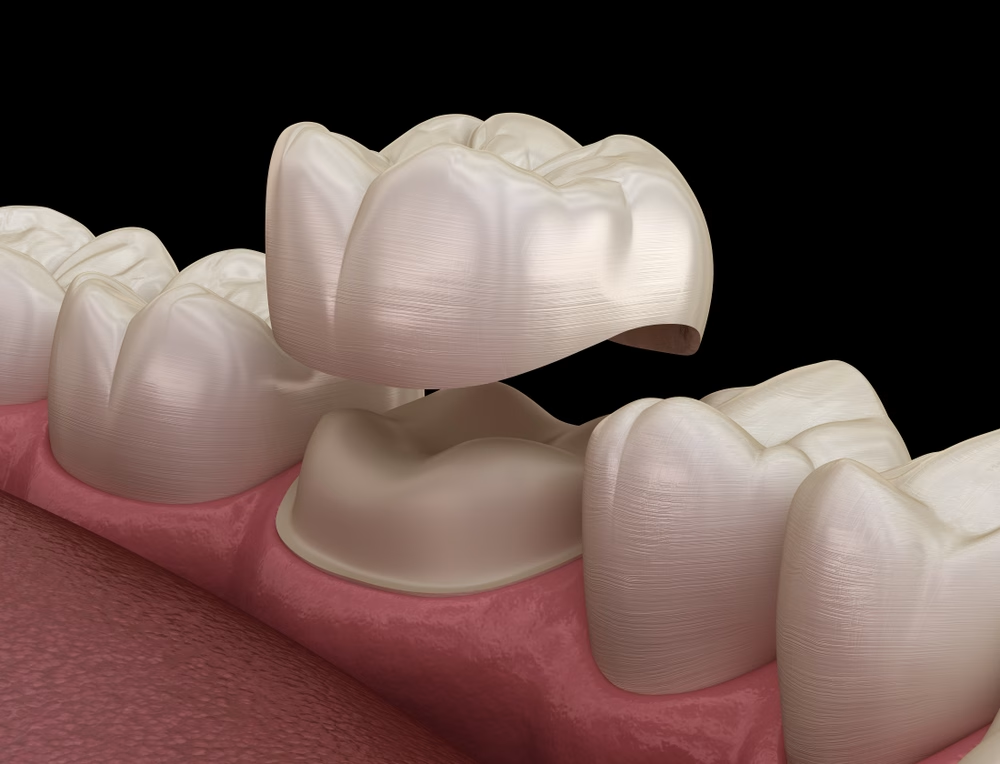
A dental crown is a custom-made restoration shaped like the visible part of a natural tooth. It fits over the prepared tooth above the gumline and is designed to restore normal form and function.
Depending on the reason for treatment, a crown may help:
- Reinforce a cracked or weakened tooth
- Restore a tooth with a large cavity
- Replace a large or failing filling
- Protect a tooth after root canal treatment
- Rebuild a severely worn tooth
- Improve the shape or appearance of a damaged tooth
- Complete a dental implant
- Support part of a dental bridge
Crowns can be made from several materials, including ceramic, porcelain-based materials, zirconia, metal alloys, or combinations of materials. The appropriate choice depends on the tooth’s location, the pressure it receives, the available space, and how visible it is when you smile.
When Does a Tooth Need More Than a Filling?
A filling repairs a specific damaged area. A crown protects most or all of the visible tooth. The decision between them usually depends on how much natural structure remains after decay, cracks, or old restorative material are considered.
A filling may be appropriate when the damage is relatively limited and the remaining tooth can support the repair. A crown may be more predictable when:
- A large portion of the tooth is missing
- The remaining walls are thin
- An existing filling occupies much of the tooth
- The tooth has fractured more than once
- A crack weakens the chewing surface
- The tooth needs broader reinforcement
- The tooth has undergone root canal treatment
When too much natural width has been lost, another large filling may not protect the tooth adequately. Under chewing pressure, the remaining walls can flex or split. A crown surrounds the weakened structure and helps distribute that force more evenly.
Dr. Alyesh likes to show patients the area of concern whenever possible. Seeing the crack, X-ray, failing restoration, or missing structure often makes the recommendation much easier to understand.
Dental Crowns for Cracked Teeth
Cracked teeth can be difficult for patients to recognize because the discomfort may come and go. A tooth may feel normal while resting but hurt when biting into something firm. In other cases, the pain appears when pressure is released rather than when the patient first bites down.
A tooth crack does not heal by itself. When the crack is limited and the tooth remains restorable, a crown may help stabilize the tooth by holding the weakened sections together. Cracked teeth frequently require full-coverage protection because continued biting pressure can deepen the fracture.
Not every crack has the same prognosis. A shallow fracture may be manageable with a crown, while a crack extending beneath the gumline or deeply into the root can make the tooth more difficult to save. Dr. Alyesh evaluates the location of the crack, the condition of the nerve, and the amount of healthy tooth remaining before discussing the most appropriate next step.
Crowns After Root Canal Treatment
Root canal treatment addresses inflammation or infection inside a tooth. A crown protects the remaining outer structure afterward. These treatments are related, but they solve different problems.
A tooth requiring a root canal may already have:
- Deep decay
- A large filling
- A fracture
- Significant loss of internal structure
- Weakness caused by previous dental work
After the infected tissue is removed, the tooth still needs to withstand daily chewing pressure. Molars and premolars are especially likely to require crowns because they handle substantial force during eating.
Dr. Alyesh explains this distinction so patients understand that the crown is not repeating the root canal. The root canal treats the inside of the tooth. The crown restores and protects the outside so the tooth can continue functioning.
Replacing Large or Failing Fillings
Older fillings can serve patients well for many years, but they do not last forever. Over time, a restoration may chip, separate from the tooth, wear down, or allow new decay to form around its edges.
When an old filling is small, it may be possible to replace it with another filling. When it occupies a large portion of the tooth, removing it can reveal that the remaining natural structure is too thin to support another direct restoration safely.
A crown may then provide better reinforcement by covering the weakened tooth rather than placing more pressure within it. This is particularly important when the tooth has already undergone several cycles of filling replacement.
Dr. Alyesh does not recommend replacing a functioning restoration simply because it is old. He looks for signs that the filling or supporting tooth is beginning to fail and discusses treatment based on the current condition.
Natural-Looking Crowns for Front and Visible Teeth
A crown should restore function, but appearance also matters. This is especially true when the tooth shows during speaking or smiling.
Modern tooth-colored crowns can be designed to coordinate with surrounding teeth in:
- Shade
- Shape
- Width
- Length
- Surface texture
- Translucency
A crown that is too bright, too wide, or too uniform may stand out even if it is technically strong. Dr. Alyesh pays attention to how the restored tooth relates to the patient’s natural smile, rather than selecting a generic shape or color.
For visible teeth, a ceramic material may be selected for its natural appearance. For back teeth, strength and bite forces may play a greater role in material selection. Zirconia is often chosen for durability, while other ceramics may provide greater translucency where aesthetics are especially important.
Crowns for Worn or Heavily Used Teeth
Teeth can weaken without having a large cavity. Years of grinding, clenching, chewing, or enamel erosion may gradually shorten and flatten the teeth. Existing fillings may begin to crack, and the bite can change as tooth structure is lost.
A crown may be used to rebuild a tooth that has become too worn to function predictably. However, restoring the tooth without addressing the cause of wear may place the new crown at risk.
Dr. Alyesh evaluates whether grinding or clenching may be contributing to the damage. When appropriate, he may discuss a custom night guard to help protect the new crown and the surrounding natural teeth.
This broader view helps patients understand that restorative dentistry is not only about repairing what has already happened. It is also about reducing the chance that the same pattern continues.
What Happens During the Crown Process?
The exact process depends on the condition of the tooth, but crown treatment generally follows several key stages.
Examination and Treatment Planning
Dr. Alyesh examines the tooth, reviews any necessary imaging, and determines whether the tooth is restorable. He also checks the gums, bite, neighboring teeth, and existing dental work.
If decay, infection, or another condition must be treated first, that becomes part of the plan.
Preparing the Tooth
The tooth is numbed, and damaged or decayed structure is removed. The remaining tooth is shaped so the crown can fit over it securely.
If much of the tooth is missing, a core buildup may be needed to create enough foundation for the final restoration.
Recording the Tooth and Bite
An impression or digital record is made so the crown can be designed for the prepared tooth. The opposing teeth are also recorded because the crown must fit comfortably within the patient’s bite.
Temporary Protection
When the final crown is made outside the office, a temporary crown may be placed to protect the prepared tooth. Temporary restorations are useful, but they are not intended to handle the same force as the permanent crown.
Patients should avoid hard or sticky foods that could crack or loosen the temporary restoration.
Final Crown Placement
Once the custom crown is ready, Dr. Alyesh checks its fit, contact with neighboring teeth, appearance, and relationship with the bite. Adjustments can be made before the crown is secured in place.
Crown treatment frequently takes two appointments, although some dental practices use same-day design and milling systems.
Will Getting a Dental Crown Hurt?
The tooth is generally numbed before preparation begins. Patients may feel pressure, vibration, or movement, but the goal is to prevent sharp discomfort during treatment.
After the appointment, the tooth or surrounding gum may feel temporarily tender. Some sensitivity can occur while the tooth settles, especially if it was already irritated before treatment.
Dr. Alyesh understands that patients may arrive worried because of prior dental experiences. He takes time to explain what is happening, checks on comfort during treatment, and avoids making patients feel rushed. His gentle approach and attention to detail are central to the care experience at Credit Family Dentistry.
Why the Bite Check Is So Important
A crown can look natural and still feel uncomfortable if it is slightly too high. Even a small imbalance may place excess pressure on the restored tooth and cause tenderness when chewing.
Dr. Alyesh checks the bite carefully before the appointment is complete. However, numbness can make it difficult for a patient to judge the bite accurately at first. If the crown continues to feel high, uneven, or sore after the numbness wears off, the patient should contact the office.
A minor adjustment can often correct the issue quickly. Patients should not spend weeks chewing around a crown that does not feel right.
How Long Do Dental Crowns Last?
Dental crowns are designed for long-term use, but no restoration lasts forever. Many crowns function for approximately 10 to 15 years, and some remain successful longer with excellent care.
Longevity depends on factors such as:
- Crown material
- Condition of the underlying tooth
- Oral hygiene
- Gum health
- Bite pressure
- Grinding or clenching
- Diet and chewing habits
- Regular dental care
A patient who grinds heavily, chews ice, or develops decay around the crown margin may need replacement sooner than someone without those risk factors.
Routine exams allow Dr. Alyesh to monitor the restoration and identify small changes before they become more serious.
Caring for a Dental Crown
A crowned tooth still requires daily brushing and cleaning between the teeth. The crown material itself cannot develop a cavity, but the natural tooth at the edge of the crown can.
To protect the tooth and restoration:
- Brush thoroughly twice a day
- Floss around the crown every day
- Attend routine dental exams and cleanings
- Avoid chewing ice and very hard objects
- Do not use teeth to open packaging
- Wear a night guard if recommended
- Contact the office if the crown feels loose or painful
Healthy gums are also important. Gum inflammation or recession may expose the crown margin and affect both appearance and long-term stability.
What Should You Do If a Crown Falls Off?
A loose or detached crown should be evaluated promptly. Keep the restoration if it comes out, but do not use household glue to put it back.
The tooth underneath may be sensitive or structurally vulnerable. Depending on the condition of the crown and the tooth, the restoration may be recemented, repaired, or replaced. If decay or fracture has developed underneath, additional treatment may be necessary.
Avoid chewing on the exposed tooth until it has been examined. Even if it does not hurt, it may be easier to damage without the crown protecting it.
Dental Crowns and Missing Teeth
The word “crown” can refer to more than one type of restoration.
A crown placed over a natural tooth protects and rebuilds that tooth. An implant crown attaches to a dental implant and replaces the visible part of a missing tooth. Crowns may also be used as part of a dental bridge, where supporting crowns help hold an artificial tooth in a gap.
Dr. Alyesh explains which type of crown is being discussed and how it fits into the larger treatment plan. This helps patients understand whether the goal is to save an existing tooth or replace one that is already missing.
A Personal Approach to Restorative Dentistry
Patients often feel uneasy when they learn that a tooth is cracked or structurally weak. They may worry that the treatment will be uncomfortable, that the crown will look obvious, or that the recommendation is more extensive than necessary.
Dr. Alyesh likes to reduce that uncertainty by showing patients what he sees and explaining why a particular restoration is being considered. He wants patients to understand the condition of the tooth, the purpose of the crown, and the alternatives that may be available.
With more than 10 years of experience, Dr. Alyesh provides general, cosmetic, implant, endodontic, and oral surgery services in a welcoming, family-friendly environment. Credit Family Dentistry also serves both English- and Spanish-speaking patients, helping more families communicate comfortably about their care.
Dental Crowns Near Arleta, CA
Credit Family Dentistry is located nearby in Panorama City and welcomes patients from Arleta and surrounding San Fernando Valley communities. The practice provides comprehensive treatment for cracked teeth, large fillings, severe decay, root canal restoration, worn teeth, and aging crowns.
Whether you recently broke a tooth or were told that an old filling is leaving the tooth vulnerable, the first step is a careful evaluation. Dr. Alyesh will explain whether the tooth is better treated with a filling, inlay, onlay, or crown and help you understand the reasoning behind the recommendation.
Schedule a Dental Crown Consultation Near Arleta, CA
If you have a cracked, decayed, worn, or weakened tooth, call Dr. Alyesh at (818) 895-1321 to schedule an appointment. We will evaluate the tooth, explain whether a dental crown is appropriate, and recommend the treatment that best protects your comfort, chewing function, and long-term oral health.
A weakened tooth can continue to deteriorate even when the symptoms come and go. Let our dental team help you restore strength, stability, and confidence with a custom crown designed around your needs.