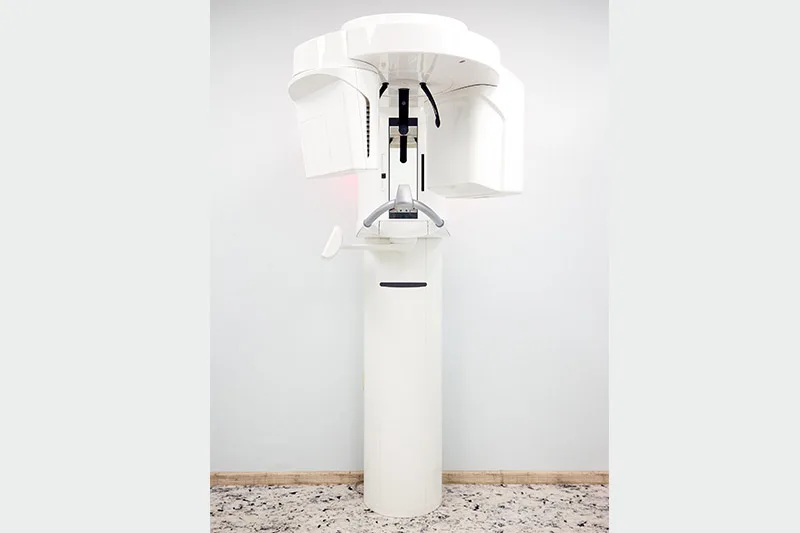



Sometimes a regular dental X-ray gives enough information. Sometimes it does not. When a case needs a deeper look, more precision, or a clearer picture of what is happening below the surface, advanced imaging can make a real difference. At Credit Family Dentistry, we provide CBCT – Dental Cone Beam in Panorama City, CA to help diagnose complex issues and plan treatment with greater accuracy.
CBCT stands for cone beam computed tomography. It is a form of 3D dental imaging that captures highly detailed views of the teeth, roots, bone, nerves, jaw joints, sinuses, and surrounding structures. For patients, what matters most is simple. Better imaging helps lead to better decisions.
We Use Imaging to Plan More Thoughtfully
Technology is not there to impress patients. It is there to help Dr. Alyesh see more clearly, diagnose more confidently, and plan treatment in a way that protects your comfort and long-term oral health.
That matters because dentistry is not just about looking at one tooth in isolation. A tooth sits in bone. It sits near nerves. It relates to the bite, the jaw, the sinus, and the surrounding tissues. When treatment is more advanced, those relationships matter even more. CBCT helps make those relationships visible in three dimensions instead of flattening them into a simple two-dimensional image.
Dr. Alyesh uses technology in a way that serves the patient. If a regular X-ray gives the answer, that may be enough. If a case needs more clarity, CBCT can help make the next step more precise and more predictable.
What CBCT Actually Is
A cone beam scan uses a cone-shaped X-ray beam to capture data that can be reconstructed into a three-dimensional image of the dental and facial structures. It is not the same as a regular dental X-ray, and it is not the same as a large medical CT scan done in a hospital setting.
What makes it useful in dentistry is that it gives a more complete and more targeted view of the areas dentists often need to evaluate closely. That includes:
- teeth and roots
- jawbone
- nerve pathways
- maxillary sinuses
- temporomandibular joints
- impacted teeth
- surrounding tissue and supporting anatomy
Why 3D Imaging Matters More Than Patients Realize
Most patients do not come in asking for a cone beam scan. They come in because something hurts, something is unclear, or a treatment plan needs to be mapped out carefully.
This is where 3D imaging becomes valuable. A two-dimensional X-ray can be very useful, but it is still a flattened image. When there are overlapping structures, hidden angles, unusual root shapes, nerve proximity, sinus involvement, or surgical considerations, the extra depth of a 3D image can change everything.
That means Dr. Alyesh can look beyond the obvious and plan with more confidence when a case is complex.
When Dr. Alyesh May Recommend a CBCT Scan
Not every patient needs a CBCT scan. In fact, many routine dental visits do not require it at all. But there are certain situations where the additional detail can be extremely helpful.
Dr. Alyesh may recommend cone beam imaging for situations such as:
Dental implant planning
Implant placement depends on knowing the shape and quality of the jawbone and the location of nearby anatomical structures.
Impacted teeth
When a tooth is trapped below the gums or bone, 3D imaging can help show exactly where it is positioned and how it relates to nearby roots or nerves.
Root canal diagnosis and endodontic planning
Some endodontic cases require more detail than a standard X-ray can provide. CBCT can help evaluate root anatomy, bone around the tooth, and other details that influence diagnosis and treatment.
Sinus evaluation
The upper back teeth often sit close to the maxillary sinuses. When treatment in that area is being considered, especially implants or surgery, 3D imaging can help clarify the relationship between the teeth and the sinus.
Bone evaluation
Some procedures require a more complete look at bone quantity, bone shape, or the presence of pathology.
TMJ or jaw-related assessment
In selected cases, CBCT may help evaluate jaw structures and joint-related anatomy more closely.
Unclear or persistent symptoms
When a patient has pain or symptoms that are not fully explained by routine imaging, a CBCT scan may provide the extra information needed to move forward wisely.
Dr. Alyesh recommends this type of scan only when it adds real value to diagnosis or planning. Patients appreciate that because it feels measured and personal, not routine for the sake of routine.
What the Scan Helps Us See
The value of a CBCT scan is not just that it is advanced technology. Its value is that it helps Dr. Alyesh answer very practical questions.
Questions like:
- How much bone is really there?
- How close is that tooth to the nerve?
- Is there hidden infection at the root?
- How is this impacted tooth positioned?
- What is happening around the sinus?
- Can this implant be placed safely and predictably?
Those are the kinds of questions that can directly affect treatment choices.
What a CBCT Scan Is Like for the Patient
One of the biggest concerns patients have is whether the scan will be difficult, uncomfortable, or time-consuming. In most cases, it is neither.
A CBCT scan is generally quick and noninvasive. You are positioned in the scanner, and the machine rotates around your head while capturing the image. There are no incisions, no recovery period, and no lengthy procedure afterward.
From the patient’s point of view, it usually feels far easier than the name cone beam computed tomography suggests.
Why This Kind of Imaging Supports Better Treatment Planning
We are always trying to reduce guesswork. That is one of the strongest reasons to use CBCT when it is indicated.
When Dr. Alyesh has a more complete view of the anatomy, treatment planning can become more precise. That may help reduce surprises, guide better decisions, and allow more confidence in choosing the right next step.
For a patient, that often means feeling more secure in the plan. It is easier to move forward when you know the recommendation is based on a clearer picture of what is really happening.
CBCT vs. Standard Dental X-Rays
Standard dental X-rays are still an essential part of dentistry. Dr. Alyesh uses them regularly because they are often exactly what is needed for routine exams, cavity detection, and general monitoring.
But they do have limits. CBCT is different because it provides a 3D image rather than a flat one. It is generally reserved for cases where that added detail changes the quality of diagnosis or planning. In other words, this is not about replacing standard X-rays. It is about using the right imaging tool for the right situation.
Is CBCT Safe?
Patients often ask this, and it is a fair question.
Cone beam imaging is a modern diagnostic tool used when the additional information is clinically important. Dr. Alyesh recommends imaging thoughtfully. If a CBCT scan is suggested, it is because he believes the information it provides will meaningfully improve diagnosis, treatment planning, or patient safety.
That kind of judgment matters. Patients want to know that technology is being used with intention, not casually.
A Better Experience Starts with Better Clarity
A lot of patient anxiety comes from not knowing what is going on. When the problem is unclear, the treatment can feel uncertain too. Advanced imaging helps change that.
Dr. Alyesh uses clear visuals and direct explanation to help patients understand what he sees and why a particular recommendation makes sense. That personal, educational style is part of what helps patients feel calmer and more confident, especially when the case is more involved.
This is one reason CBCT can be so helpful beyond the clinical side. It does not just help the dentist. It often helps the patient feel more informed and more included in the decision-making process.
Why Patients Choose Credit Family Dentistry
Patients looking for CBCT dental cone beam imaging in Panorama City are usually looking for more than a scan. They want thoughtful care, clear communication, and a dentist who knows how to use advanced imaging in a way that truly supports treatment.
Patients choose our office because we offer:
- personalized treatment planning
- advanced 3D imaging when it is clinically useful
- a welcoming, family-friendly environment
- bilingual support for English and Spanish-speaking patients
- a gentle, patient-focused approach
- comprehensive dental services in one office
Dr. Alyesh brings a careful, patient-first mindset to diagnosis and planning. He explains treatment clearly, uses technology thoughtfully, and makes sure patients understand not just what is being recommended, but why. That more personal approach helps patients feel more comfortable even when the case is complex.
Serving Panorama City and Nearby Communities
Credit Family Dentistry is proud to provide CBCT – Dental Cone Beam imaging in Panorama City, CA and nearby communities. Whether you are planning implants, evaluating an impacted tooth, dealing with unexplained symptoms, or preparing for a more complex procedure, our office can help you get the detailed information needed to plan treatment more confidently.
Schedule a CBCT – Dental Cone Beam Consultation in Panorama City, CA
If you need advanced dental imaging for diagnosis or treatment planning, call Dr. Alyesh at (818) 895-1321 to schedule an appointment. We will evaluate your needs, explain whether CBCT imaging is appropriate, and recommend the care that best protects your comfort, supports accurate diagnosis, and helps guide long-term oral health.
When the details matter, better imaging can make all the difference. Let our Panorama City dental team help you move forward with clearer answers and a more confident plan.