


Not every damaged tooth needs a crown, and not every cavity can be handled with a simple filling. Sometimes the best solution is something in between. At Credit Family Dentistry, we provide inlay/onlays in Panorama City, CA for patients who need a tooth restored in a way that is strong, precise, and conservative.
This matters because when a tooth is damaged, the goal is not just to patch it. The goal is to protect it in a way that preserves as much healthy structure as possible while restoring comfort and confidence. That balance is one of the reasons inlays and onlays remain such a valuable treatment option in restorative dentistry.
Dr. Alyesh takes a thoughtful approach when recommending treatment. If a tooth can be restored without moving all the way to a full crown, he looks closely at whether a more conservative solution may still give the patient the strength, protection, and appearance they need. That kind of judgment matters because the best dentistry is often not the most aggressive option. It is the right option for the specific tooth in front of you.
When a Filling Is Not Enough, but a Crown May Be More Than You Need
A small cavity may be treated with a filling. A severely weakened or fractured tooth may need a crown. But there is a middle category of damage where the tooth needs more support than a filling can offer, while still having enough healthy structure that a full crown may not be necessary.
That is where an inlay or onlay can be an excellent fit. These restorations are custom made to repair the damaged portion of the tooth and reinforce it with a more precise, durable restoration than a direct filling alone.
For patients, that often translates into something very simple. A damaged tooth can be repaired properly without unnecessarily removing healthy tooth structure.
What Is an Inlay?
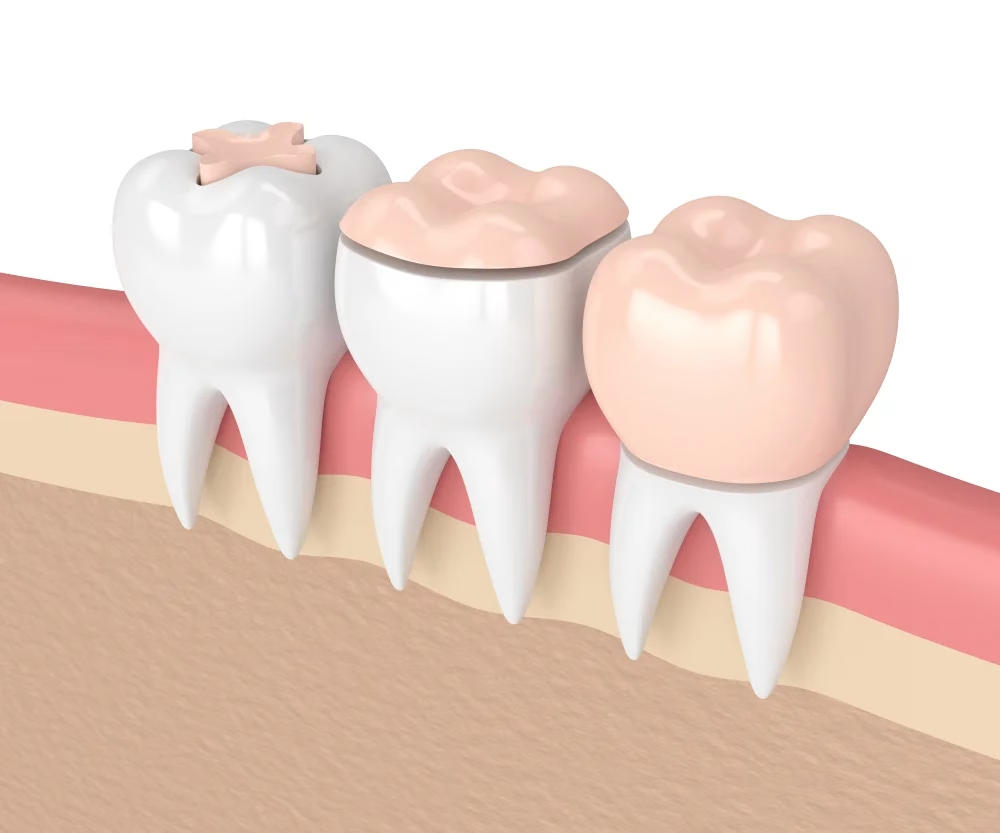
An inlay is a custom restoration used when the damaged area is within the chewing surface of a tooth and does not extend over the outer cusps. It fits into the prepared space in the tooth, much like a very precise, custom-made puzzle piece.
Because it is created specifically for that tooth, it can offer a more exact fit than a traditional filling in cases where the area is larger or the shape of the damage is more complex. Inlays are often used when decay or structural damage is too significant for a standard filling but does not require full crown coverage.
What Is an Onlay?
An onlay is similar, but it covers a larger area of the tooth. It may extend over one or more cusps when more support is needed. In practical terms, an onlay is used when the tooth needs more reinforcement than an inlay can provide, but still does not require the full coverage of a crown.
Some dentists refer to onlays as partial crowns because of the amount of tooth they restore. But the important point for patients is that they are still designed to preserve more natural tooth structure than a full crown whenever that is clinically appropriate.
Why Patients End Up Needing Inlays or Onlays
Most people do not come into the office asking for an inlay or an onlay by name. They come in because something feels off. Maybe a tooth hurts when they bite. Maybe they know an old filling is failing. Maybe part of a tooth chipped and they want to save it before it gets worse.
Inlays and onlays are often recommended in situations like these:
- moderate tooth decay
- a cracked or fractured tooth
- a worn chewing surface
- a failing or aging filling
- a tooth that needs more support than a simple filling can provide
What makes these restorations so helpful is that they allow the tooth to be rebuilt with more strength and precision than a direct filling, while avoiding full crown coverage when possible.
The Benefit of Being Conservative
Patients do not always realize how important it is to preserve natural tooth structure until the options are explained clearly. Every time additional tooth structure is removed, that has consequences. Sometimes it is necessary, and a crown is absolutely the right choice. But when it is not necessary, preserving more of the original tooth is often beneficial.
That is one reason Dr. Alyesh slows down and evaluates the real condition of the tooth rather than jumping to the broadest restoration by default. If the tooth can be restored in a way that is strong, long-lasting, and more conservative, that is often worth considering. Patients appreciate that approach because it feels personal, careful, and not rushed.
In restorative dentistry, preserving healthy enamel and tooth structure whenever possible is not just a nice idea. It is a sound principle.
What Makes Inlays and Onlays Different from Fillings
A filling is placed directly into the tooth and shaped during the appointment. That works very well in many cases, especially when the area is smaller. But when the damaged portion becomes larger, the tooth may need something more precise and more supportive.
An inlay or onlay is fabricated outside the mouth and then bonded onto the tooth. Because it is custom made, it can provide a more exact fit and may offer better reinforcement for a tooth that has been weakened.
For the patient, that difference matters most when they bite down. The tooth should feel stable, comfortable, and protected.
What Makes Them Different from Crowns
A crown covers the entire visible portion of the tooth above the gumline. An inlay or onlay restores only the damaged section. So the real difference is scope. A crown is broader coverage. An inlay or onlay is more selective.
That is why onlays are often seen as a more conservative alternative in the right case. If the whole tooth does not need to be covered, preserving more of it may be the better path.
What the Process Feels Like for the Patient
One of the most helpful things a dentist can do is make restorative treatment feel understandable instead of intimidating. The process usually starts with an exam and a discussion. Dr. Alyesh looks at the tooth, the amount of remaining healthy structure, your symptoms, your bite, and whether the tooth is better served by a filling, inlay, onlay, or crown. That step matters because the best result starts with the right diagnosis, not just the right material.
If an inlay or onlay is the right choice, the damaged area is removed and the tooth is shaped so the custom restoration can fit correctly. Impressions or digital scans are then taken. The restoration is fabricated to match the tooth, and once ready, it is bonded into place and adjusted so your bite feels natural. Patients often like this treatment because it feels very intentional. It is not a generic patch. It is a restoration built specifically for that tooth.
Why Precision Matters So Much Here
A lot of restorative dentistry comes down to margins, fit, bite, and balance. Inlays and onlays work best when they are carefully designed and properly placed. That precision can affect comfort, longevity, and how natural the restoration feels in daily use.
This is another reason Dr. Alyesh’s style of care matters. He is attentive to detail and makes sure treatment feels personalized, not mechanical. Patients often feel more comfortable when they know their dentist is not just doing the procedure, but really paying attention to how the tooth fits into the rest of the mouth. For a restoration like this, that kind of detail-oriented approach makes a real difference.
The Aesthetic Side Matters Too
Even though inlays and onlays are often talked about in functional terms, patients also care deeply about how their teeth look. That is understandable. A restoration should not only protect the tooth. It should blend in naturally with your smile.
Modern inlays and onlays are typically designed to look natural and fit harmoniously with the surrounding teeth. They are often chosen not only because they are durable, but because they can restore a tooth in a way that feels visually seamless. When a patient smiles, speaks, or laughs, they should not feel like all attention goes to the repaired tooth. Good restorative dentistry should disappear into the smile.
Who May Be a Good Candidate
You may be a good candidate for an inlay or onlay if:
- you have a tooth with moderate decay
- you have an old filling that is breaking down
- part of the chewing surface is damaged or cracked
- you want to restore a tooth conservatively when possible
- your dentist believes a full crown is not yet necessary
The best candidate is not determined by one symptom alone. It depends on the structure of the tooth, your bite, and how much support is needed for the tooth to function comfortably over time. That is why an exam with Dr. Alyesh is important. He looks at the whole picture, not just the damaged spot.
How Long Inlays and Onlays Last
Patients naturally want to know whether a restoration like this is worth it long term. The answer depends on several factors, including the size of the restoration, the material, your oral hygiene, and whether you grind or clench your teeth.
In general, inlays and onlays are durable restorative options when properly cared for. Good daily hygiene, routine dental visits, and protecting the teeth from excessive pressure all help support longevity.
If you grind your teeth at night, Dr. Alyesh may also recommend a custom night guard to help protect both your natural teeth and any restorations from excess wear.
Why Patients Choose Credit Family Dentistry
Patients who need restorative work are often looking for more than just a repair. They want to feel that the treatment recommendation makes sense, that the dentist is paying attention, and that their tooth is not being overtreated.
Patients choose Credit Family Dentistry because we offer:
- personalized restorative treatment planning
- conservative options when appropriate
- modern dental techniques and technology
- a welcoming, family-friendly environment
- bilingual support for English and Spanish-speaking patients
- a gentle, patient-focused approach
Dr. Alyesh founded Credit Family Dentistry to provide compassionate, high-quality care with attention to comfort, detail, and long-term oral health. He helps patients understand why a particular treatment is being recommended so they can feel confident in the decision, not just compliant with it. That patient-first communication style is a meaningful part of the care experience here.
Serving Panorama City and Nearby Communities
Credit Family Dentistry is proud to provide inlay/onlay restorations in Panorama City, CA and nearby communities. Whether you have a damaged tooth, a failing filling, or a tooth that needs more support than a filling can provide, our team can help you explore a solution that protects the tooth while preserving as much healthy structure as possible.
Schedule an Inlay/Onlay Consultation in Panorama City, CA
If you have a damaged tooth and want to know whether an inlay or onlay is the right solution, call Dr. Alyesh at (818) 895-1321 to schedule an appointment. We will evaluate the tooth, explain whether a filling, inlay, onlay, or crown is the best fit, and recommend the treatment that best protects your comfort and long-term oral health.
A damaged tooth does not always need the most aggressive solution. Let our Panorama City dental team help you restore strength, function, and confidence with a custom inlay or onlay designed for your smile.