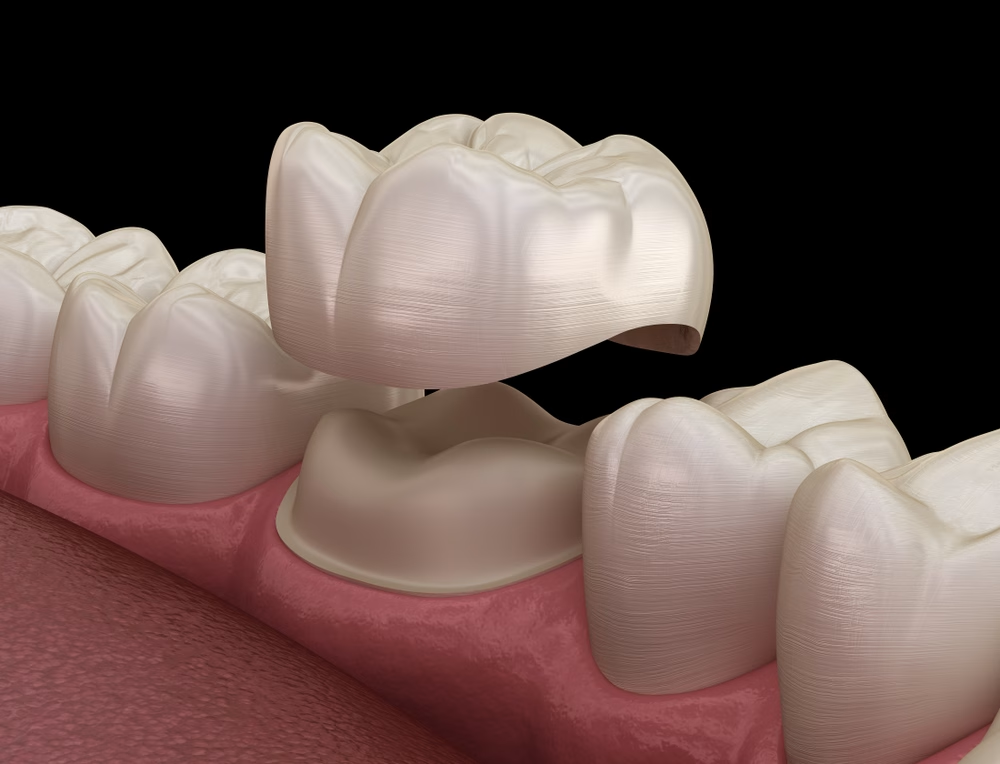



When a tooth becomes too weak, too broken, or too compromised for a simple filling to do the job, a dental crown is often the treatment that helps save it. At Credit Family Dentistry, we provide dental crowns in Panorama City, CA for patients who need to restore strength, protect a damaged tooth, and get back to chewing, smiling, and living more comfortably.
A dental crown is one of the most versatile restorations in dentistry. It can help when a tooth is cracked, heavily filled, badly decayed, worn down, or recovering after a root canal. For patients, what matters most is usually simple. You want the tooth to feel secure again. You want it to look natural. And you want to know the treatment recommendation actually makes sense.
That is where Dr. Alyesh’s approach matters. He looks carefully at what the tooth truly needs before recommending treatment. If a tooth can be restored conservatively, he considers that. If it needs the full protection of a crown, he explains why clearly. Patients appreciate that because it feels thoughtful, personal, and based on protecting the tooth long term, not just patching the immediate problem.
What a Dental Crown Actually Does
A dental crown is often described as a cap, but that word can make it sound simpler than it really is. A crown is a custom restoration that fits over the visible portion of a tooth to rebuild its shape, protect its structure, and restore its function. It is made to fit your bite and blend with the surrounding teeth so that the tooth not only works better, but looks natural in your smile as well.
In a healthy tooth, the enamel and underlying structure handle normal chewing forces well. But once a tooth has been weakened by decay, fracture, or a large old filling, it may no longer be strong enough to hold up on its own. That is where a crown becomes important. It helps distribute biting forces more safely and gives the tooth a new outer layer of protection.
For many patients, a crown is the treatment that lets them keep their natural tooth when otherwise that tooth might continue breaking down.
When a Crown May Be the Right Choice
Patients usually do not come in asking for a crown specifically. They come in because a tooth hurts, something broke, or they were told a tooth may not be strong enough for a filling alone.
A dental crown may be recommended for reasons like these:
- a tooth that is broken or fractured
- deep decay that has weakened the tooth
- a large or failing filling
- a tooth after root canal treatment
- a tooth that is severely worn down
- cosmetic improvement when shape or appearance is significantly compromised
- support for a bridge or implant restoration
Crowns can solve both functional and cosmetic problems at the same time. They are not only about making a damaged tooth look better. They are about helping it stay healthy and usable.
Why Some Teeth Need More Than a Filling
This is one of the most important conversations patients have with Dr. Alyesh.
A filling works well when the damaged area is smaller and enough healthy tooth remains to support it. But once a tooth has lost too much structure, a filling may no longer be the most predictable option. It may repair the cavity, but not fully protect the remaining tooth from future fracture.
That distinction matters. A patient may assume a filling is always the simpler or better choice, but if the tooth is already too weak, a filling can become a short-term solution to a long-term problem. A crown is often the better choice when a tooth needs full coverage and reinforcement rather than a more limited repair.
Dr. Alyesh explains this in a grounded way. The question is not what is the smallest thing that can be done today. The real question is what will protect this tooth best over time. That kind of thinking helps patients feel that the recommendation is being made for the health of the tooth, not just for the appointment in front of them.
Dental Crowns After Root Canal Treatment
One of the most common reasons a patient may need a crown is after a root canal. Once a tooth has had root canal treatment, the infection inside the tooth has been removed, but the remaining tooth structure may be more fragile than it was before. Back teeth in particular often need full coverage because they absorb so much force when chewing.
That is why crowns are frequently recommended after root canal treatment, especially on molars and premolars. A crown helps protect the treated tooth from cracking and allows it to function more normally again.
Patients are often relieved to learn that the root canal and the crown serve two different purposes. The root canal deals with the infection inside the tooth. The crown protects the outside structure so the tooth can keep functioning.
Crowns for Cracked, Worn, or Broken Teeth
Not every crowned tooth has a cavity. Some teeth need crowns because they are cracked, chipped, worn down, or structurally unstable. A crack may start small but deepen over time. A tooth with heavy grinding wear may not break dramatically, but it can slowly lose the shape and strength it needs to function properly.
Crowns are often used to restore broken teeth, strengthen weak teeth, and protect teeth at risk of further damage. That makes them especially valuable for patients who clench or grind, have older large fillings, or have teeth that have already begun to fracture.
Dr. Alyesh helps patients understand that these situations are often about prevention as much as repair. Sometimes the crown is restoring damage that already happened. Other times, it is preventing the next, more serious break.
The Cosmetic Benefit Is Real Too
Patients often think of crowns as purely restorative, but appearance matters here as well. If a front tooth is damaged, misshapen, heavily worn, or badly discolored, a crown can restore a more natural and balanced look while also protecting the tooth itself.
Modern crowns are often tooth-colored and designed to blend in with the surrounding smile. That matters more than patients sometimes admit. A crown should not make you feel self-conscious when you smile. It should let the tooth disappear naturally into the rest of your smile.
What the Dental Crown Process Usually Looks Like
Patients often imagine getting a crown is a big, complicated process. In reality, it is usually very manageable.
The process begins with an exam and evaluation of the tooth. Dr. Alyesh looks at the condition of the tooth, how much healthy structure remains, the bite, the surrounding gum tissue, and whether a crown is the best solution compared with other options. That decision-making step matters because not every tooth with damage needs the same type of treatment.
Once a crown is determined to be the right choice, the tooth is prepared so the crown can fit securely over it. Impressions or digital scans are then taken so the restoration can be made to fit your tooth and bite precisely. In many cases, the final crown is placed at a follow-up visit after it has been fabricated.
When the final crown is ready, Dr. Alyesh checks the fit, the bite, and the appearance carefully. That detail matters. A crown should not only look good. It should feel right when you bite down and function naturally with the rest of your teeth.
Why Fit and Bite Matter So Much
Patients often think of a crown as one object, but really it is part of a much bigger system, your entire bite. If the fit is off or the bite feels high, even a beautiful crown can feel wrong in daily life.
This is one reason patients value a dentist who pays attention to detail. Dr. Alyesh is known for his careful, personalized style of care and for making sure treatment feels as comfortable and natural as possible. That kind of precision is especially important in restorative dentistry because small differences in fit can change how the tooth feels every day.
A well-made crown should not feel foreign for long. It should feel stable, comfortable, and like a natural part of your bite.
How Long Dental Crowns Last
Patients naturally want to know whether a crown is worth it. Part of that question is really about longevity.
Crowns are designed to be durable, but how long they last depends on several factors, including how much tooth structure remains underneath, your oral hygiene, your bite, whether you grind your teeth, and how well the crown is maintained over time.
Good habits matter here. So do regular checkups. A crown protects a tooth, but the tooth and surrounding gums still need ongoing care.
Caring for a Crown the Right Way
A crown is not a reason to stop paying attention to that tooth. In fact, good maintenance becomes even more important. The crown itself may not decay, but the tooth structure underneath and around it still can. The gums around the crown also still need to stay healthy.
To care for a crown well, patients should:
- brush thoroughly every day
- floss regularly around the crown
- keep up with routine dental visits
- avoid using teeth as tools
- wear a night guard if grinding is a concern
If you grind or clench, Dr. Alyesh may recommend a custom night guard to help protect both your natural teeth and your restorations. That kind of preventive thinking is part of how he approaches long-term care, not just the immediate procedure.
Why Patients Often Feel Better Once the Crown Is Done
One thing patients often say after crown treatment is that they wish they had taken care of the tooth sooner. A weak, cracked, or heavily damaged tooth can create a low-level stress in daily life. You chew carefully on one side. You worry that something else may break. You notice tenderness and start avoiding certain foods.
Once the crown is done and the tooth feels secure again, that background stress often disappears. The tooth feels usable again. The patient stops thinking about it all the time.
That may sound small, but it is not. Dentistry that removes worry from everyday life is meaningful dentistry.
Why Patients Choose Credit Family Dentistry
Patients looking for dental crowns in Panorama City are usually looking for more than a restoration. They want honest guidance, careful work, and a dentist who treats them like a person, not just a procedure.
Patients choose Credit Family Dentistry because we offer:
- personalized treatment planning
- modern restorative care
- tooth-colored, natural-looking options
- a welcoming, family-friendly office
- bilingual support for English and Spanish-speaking patients
- a gentle, patient-focused approach
Dr. Alyesh founded Credit Family Dentistry to provide high-quality, compassionate care with attention to comfort, detail, and long-term oral health. He explains treatment clearly so patients understand why a crown is being recommended and how it will help, which makes the entire process feel more personal and less intimidating.
Serving Panorama City and Nearby Communities
Credit Family Dentistry is proud to provide dental crowns in Panorama City, CA and nearby communities. Whether you have a cracked tooth, a large failing filling, a tooth that needs protection after root canal treatment, or a tooth that has become too weak for a filling alone, our team can help you understand your options and move forward with confidence.
Schedule a Dental Crown Consultation in Panorama City, CA
If you have a damaged or weakened tooth and want to know whether a dental crown is the right solution, call Dr. Alyesh at (818) 895-1321 to schedule an appointment. We will evaluate the tooth, explain whether a crown is appropriate, and recommend the treatment that best protects your comfort, function, and long-term oral health.
A damaged tooth should not be ignored. Let our Panorama City dental team help you restore strength, protect your smile, and feel confident using your tooth again with a custom dental crown.