


A damaged tooth does not always create constant pain. Sometimes it only hurts when you bite into something firm. Sometimes a large filling begins to feel rough or unstable. In other cases, a piece of the tooth breaks away without warning, leaving you worried that the rest may fracture next.
Credit Family Dentistry provides dental crowns for patients in Granada Hills, CA who need to strengthen and restore teeth affected by decay, cracks, large fillings, root canal treatment, or significant wear. A dental crown covers the visible portion of the tooth, creating a stronger outer surface that can improve chewing, protect weakened structure, and restore a natural appearance.
Dr. Alyesh carefully evaluates whether a crown is the right treatment before recommending one. Some teeth can be repaired successfully with a filling, inlay, or onlay. Others have lost too much structure to remain reliable without broader protection. The goal is to choose the most conservative treatment that can still provide a predictable, long-lasting result.
What a Dental Crown Is Designed to Do
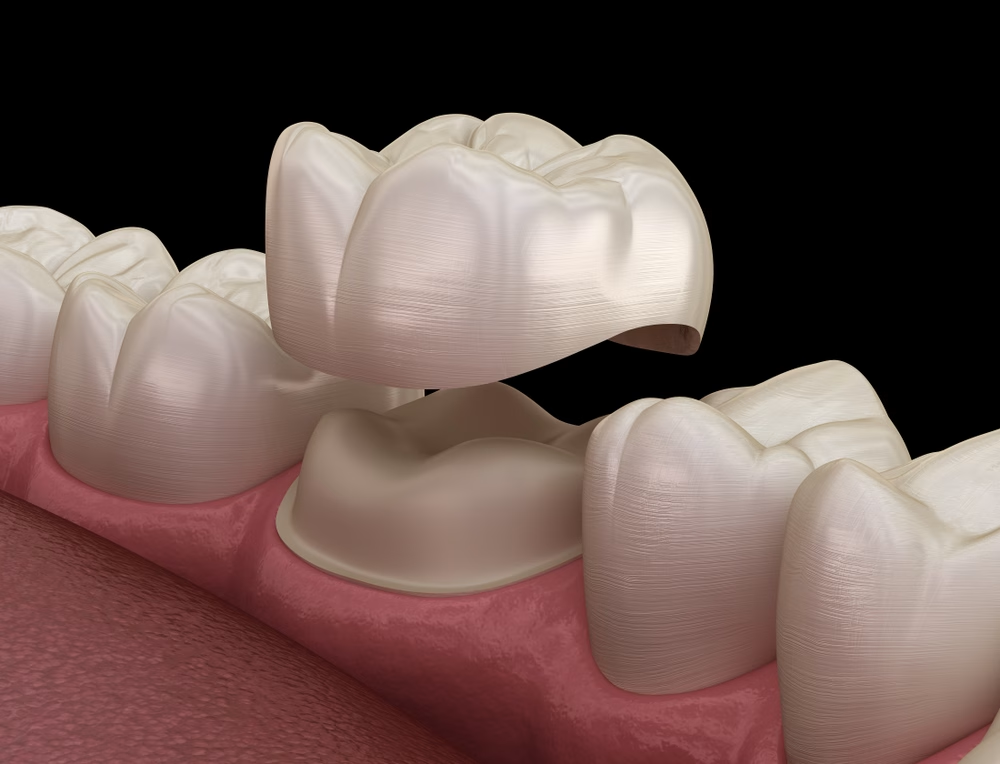
A dental crown is a custom-made restoration that fits over a prepared tooth. Patients often describe it as a cap because it surrounds the portion of the tooth above the gumline. Unlike a filling, which repairs one damaged section, a crown reinforces a larger portion of the tooth.
A crown may be used to:
- Protect a cracked tooth
- Restore a tooth with extensive decay
- Replace a very large or failing filling
- Rebuild a tooth that has broken
- Protect a tooth after root canal treatment
- Restore a severely worn chewing surface
- Improve the shape or color of a damaged tooth
- Complete a dental implant
- Support a dental bridge
The reason for treatment affects how the crown is designed. A crown on a front tooth may require especially careful attention to translucency, shape, and shade. A crown on a back molar must be designed to tolerate stronger chewing forces and fit precisely within the bite.
When a Tooth Becomes Too Weak for a Filling
A filling works well when the damaged area is limited and enough healthy tooth remains to support the restoration. As cavities and restorations become larger, the walls of natural tooth around them can become thinner and more vulnerable.
A crown may be recommended when:
- Decay affects a large percentage of the tooth
- A filling would leave weak or unsupported walls
- An old restoration occupies most of the chewing surface
- The tooth has fractured around an existing filling
- A crack extends across one or more sections of the tooth
- The tooth repeatedly breaks despite previous repairs
- Chewing pressure causes discomfort
- The remaining structure needs reinforcement from all sides
Patients sometimes wonder why another filling cannot simply be added. The concern is that a very large filling may replace missing material without protecting the weakened tooth surrounding it. Under repeated biting pressure, those thin walls may flex, crack, or split.
A crown redistributes pressure around the tooth instead of concentrating it within one repaired area. Dr. Alyesh explains this difference so patients understand why full coverage may offer a safer long-term solution.
Dental Crowns for Cracked or Fractured Teeth
A cracked tooth can be difficult to diagnose because symptoms may be inconsistent. You might feel a sharp pain when biting into a seed, nut, or piece of crusty bread, yet feel completely normal a few minutes later. The tooth may also react to cold or hurt when biting pressure is released.
Dental enamel cannot heal a crack the way skin or bone may heal after an injury. If the fracture remains limited and the tooth is still restorable, a crown may help hold the weakened sections together and reduce movement during chewing.
Not every crack can be repaired with a crown. The depth and direction of the fracture matter. A crack limited to the visible portion of the tooth may have a more favorable outlook, while one extending deeply below the gums or into the root may make the tooth difficult to save.
Dr. Alyesh evaluates the tooth, symptoms, X-rays, bite, and remaining structure before discussing the prognosis. Patients deserve a realistic explanation of what the crown can accomplish and what risks may remain.
Repairing Teeth With Large or Aging Fillings
Dental fillings can function well for many years, but they are not permanent. Over time, the restoration or surrounding tooth may wear, chip, leak, or develop new decay.
A large filling may need attention when:
- Part of the tooth breaks around it
- A visible crack forms
- Food begins catching near the restoration
- The filling feels rough or loose
- The tooth becomes sensitive
- Decay develops around the edges
- The bite feels different
- The restoration has been repaired several times
Replacing a small filling with another filling may be straightforward. Replacing a very large filling can be more complicated because removing the old material may reveal that little healthy tooth remains.
In that situation, a crown may provide better support than repeatedly placing larger fillings. Dr. Alyesh assesses whether the existing restoration is still serving the tooth or whether a different approach is needed to prevent further damage.
Crowns After Root Canal Treatment
Root canal treatment removes infected or inflamed tissue from inside a tooth. A crown is often used afterward to restore and protect the weakened outer structure.
Teeth needing root canals frequently have deep cavities, fractures, or large fillings before treatment begins. Although the root canal addresses the internal infection, the tooth may still be vulnerable to breaking under normal chewing forces.
A crown after a root canal may help:
- Protect the remaining tooth from fracture
- Restore the original chewing surface
- Rebuild lost structure
- Seal and cover the treated tooth
- Improve the appearance of a darkened tooth
- Allow the patient to chew comfortably again
Back teeth are especially likely to need crowns after root canal therapy because they absorb considerable pressure. Front teeth may sometimes be restored differently when enough healthy structure remains.
Dr. Alyesh explains whether the crown is a necessary part of completing treatment or whether another restoration may be appropriate for the specific tooth.
Choosing a Crown Material
Dental crowns can be made from several materials, and each has advantages and limitations. The best choice depends on the location of the tooth, the amount of biting pressure, the space available, the patient’s cosmetic expectations, and the condition of the surrounding teeth.
Common crown materials include:
Porcelain and Ceramic Crowns
These tooth-colored options are often selected for visible teeth because they can closely resemble natural enamel. Their shade, translucency, and surface appearance can be customized to blend with the surrounding smile.
Zirconia Crowns
Zirconia is a strong ceramic material frequently used for teeth that experience significant chewing pressure. It can also provide a natural-looking appearance, although the exact type and translucency may vary.
Porcelain-Fused-to-Metal Crowns
These restorations combine a metal substructure with an outer porcelain layer. They can provide strength and acceptable appearance, though the metal edge may become visible near the gums if recession occurs.
Metal Crowns
Certain metal alloys are highly durable and require less tooth reduction in some situations. Their color makes them more suitable for areas where appearance is less important.
There is no single material that is best for every patient. Dr. Alyesh considers function and appearance together when recommending a crown.
Creating a Crown That Looks Natural
Patients often worry that a crown will look too bright, bulky, or artificial. A natural result depends on more than matching a shade tab.
The crown must also coordinate with the surrounding teeth in:
- Width
- Length
- Shape
- Surface texture
- Translucency
- Gumline contour
- Position within the smile
- Amount of tooth visible when speaking
A very white crown may stand out if the neighboring teeth have warmer or more varied coloring. A crown that is too smooth or symmetrical may also look less natural than the teeth around it.
Dr. Alyesh considers how the restoration fits the patient’s overall smile rather than treating the crown as an isolated object. The goal is for the restored tooth to look appropriate without becoming the first thing other people notice.
What to Expect During the Dental Crown Process
The exact process depends on the tooth, but traditional crown treatment usually includes preparation, a temporary restoration, and final placement.
Examination and Diagnosis
Dr. Alyesh examines the tooth and reviews any necessary X-rays. He checks for decay, cracks, infection, gum health, and the amount of remaining structure. If the tooth requires root canal treatment or another procedure first, that becomes part of the treatment plan.
Numbing and Preparing the Tooth
The area is numbed for comfort. Decay, damaged material, and unsupported tooth structure are removed. The remaining tooth is shaped so the crown can fit over it securely without feeling excessively bulky.
If a large amount of structure is missing, a buildup may be needed to create a stable foundation.
Recording the Tooth and Bite
An impression or digital scan captures the prepared tooth, neighboring teeth, and bite. These records allow the crown to be created with the correct shape, contact points, and chewing surface.
Placing a Temporary Crown
A temporary crown protects the prepared tooth while the final restoration is being made. It helps maintain appearance, spacing, and basic function, but it is not as strong or precisely fitted as the permanent crown.
Patients should avoid sticky foods, hard candy, ice, and other items that could loosen or crack the temporary restoration.
Placing the Final Crown
At the final appointment, Dr. Alyesh checks the crown’s fit, appearance, contact with neighboring teeth, and relationship with the bite. Adjustments may be made before it is secured.
The crown should feel stable and natural enough that the patient gradually stops noticing it during normal activities.
Why the Bite Must Be Checked Carefully
A crown can fit the tooth accurately and still feel uncomfortable if it contacts the opposing teeth too early. Even a very small high point may create repeated pressure each time the patient closes or chews.
Signs that the bite may need adjustment include:
- Pain when biting
- A feeling that one tooth touches first
- Tenderness that does not improve
- Difficulty chewing on the restored side
- Jaw fatigue
- Sensitivity that develops after crown placement
The mouth may remain numb during the placement appointment, making it harder for the patient to judge the bite accurately. If the crown still feels high after the numbness wears off, contact the office. A minor adjustment can often resolve the problem quickly.
Does Getting a Dental Crown Hurt?
The tooth is typically numbed before preparation, so the goal is to keep treatment comfortable. Patients may notice pressure, vibration, or movement during the procedure, but they should not feel sharp pain.
Afterward, the tooth and surrounding gum may be mildly tender. Temporary sensitivity to temperature or chewing can occur, especially if the tooth was already irritated before treatment. These symptoms often improve as the area settles.
Dr. Alyesh understands that dental treatment can feel intimidating, particularly for patients who have experienced discomfort or felt unheard in the past. He explains the procedure clearly and checks on comfort throughout the appointment.
How Long Dental Crowns Can Last
A crown is designed for long-term use, but no restoration is guaranteed to last forever. Many crowns function successfully for approximately 10 to 15 years, while some last considerably longer.
Longevity depends on:
- The crown material
- The health of the supporting tooth
- The accuracy of the fit
- Daily brushing and flossing
- Gum health
- Bite pressure
- Grinding or clenching
- Diet and chewing habits
- Regular dental examinations
A crown may fail sooner if the tooth develops decay near the margin, the restoration cracks, or the patient places excessive pressure on it. Teeth grinding can be especially damaging because it exposes the crown to repeated force during sleep.
Patients with signs of grinding may benefit from a custom night guard to help protect the crown and neighboring teeth.
Caring for a Crown at Home
A crowned tooth still requires daily care. The crown itself cannot develop a cavity, but the natural tooth underneath and along its edges can.
To protect the restoration:
- Brush twice daily with fluoride toothpaste
- Floss around the crown every day
- Clean carefully near the gumline
- Avoid chewing ice and very hard objects
- Do not use teeth as tools
- Attend routine exams and cleanings
- Wear a night guard if recommended
- Report looseness, pain, or changes promptly
Patients sometimes stop flossing around a crown because they worry about pulling it off. A properly secured permanent crown should tolerate normal flossing. Daily cleaning is essential because plaque around the margin can lead to gum inflammation or recurrent decay.
What to Do If a Crown Becomes Loose
A loose crown should be examined promptly, even if it is not painful. Movement may indicate that the cement has weakened, decay has developed underneath, or the supporting tooth has fractured.
If the crown comes out:
- Keep the restoration
- Avoid chewing on the exposed tooth
- Do not use household glue
- Keep the area reasonably clean
- Contact the dental office
- Bring the crown to the appointment
The crown may sometimes be cleaned and recemented if it remains intact and the tooth underneath is healthy. If decay, fracture, or poor fit is present, a new crown or additional treatment may be necessary.
What Causes Decay Under a Crown?
Although the crown material cannot decay, the natural tooth can still develop a cavity near the edge of the restoration. Plaque tends to collect where the crown meets the tooth, especially when oral hygiene is inconsistent or the margin becomes difficult to clean.
Risk factors can include:
- Infrequent brushing or flossing
- Gum recession
- Dry mouth
- Frequent sugar exposure
- A damaged or open crown margin
- An older restoration
- Food trapping between teeth
- Missed dental checkups
Decay beneath a crown may not be visible at home. X-rays and clinical exams help identify changes before the damage becomes extensive.
Crowns for Patients Who Grind Their Teeth
Grinding and clenching can damage natural teeth, fillings, and crowns. The pressure may flatten chewing surfaces, chip ceramic, loosen restorations, or cause muscle and jaw discomfort.
A patient who grinds may still receive a crown, but the treatment plan may need to account for the additional force. Material selection, crown thickness, bite design, and night guard protection may all become more important.
Placing a crown without considering the cause of the original damage can leave the new restoration vulnerable. Dr. Alyesh evaluates wear patterns and asks about jaw tension, morning headaches, or nighttime grinding before completing the plan.
The Difference Between a Tooth Crown and an Implant Crown
The word “crown” can describe two related but different restorations.
A tooth-supported crown covers and protects an existing natural tooth. An implant crown replaces the visible portion of a missing tooth and attaches to a dental implant placed in the jawbone.
The treatment processes differ because a natural tooth must be prepared, while an implant crown connects to an implant and abutment after healing. Crowns may also be joined as part of a dental bridge used to replace a missing tooth.
Dr. Alyesh explains which type of restoration is being recommended and how it fits into the overall treatment plan.
Personalized Restorative Dentistry Near Granada Hills
Patients want strong dental work, but they also want recommendations they can understand and trust. Being told that a tooth needs a crown can create concerns about pain, appearance, cost, and whether the treatment is truly necessary.
Dr. Alyesh takes time to show patients what is happening whenever possible. He explains how much healthy tooth remains, what may happen if the tooth is left untreated, and whether another restoration could be appropriate.
With more than 10 years of experience, Dr. Alyesh provides general, cosmetic, implant, endodontic, and surgical dental care. Credit Family Dentistry also welcomes both English- and Spanish-speaking patients in a family-friendly setting.
Dental Crowns Near Granada Hills, CA
Credit Family Dentistry is located nearby in Panorama City and welcomes patients from Granada Hills and surrounding San Fernando Valley communities. Patients can receive exams, digital imaging, fillings, inlays, onlays, root canal treatment, crowns, bridges, implants, and ongoing preventive care through one practice.
Whether a tooth has cracked suddenly or gradually weakened around an old filling, the first step is a careful examination. Dr. Alyesh will explain whether the tooth needs a filling, inlay, onlay, crown, or another treatment and help you understand the benefits and limitations of each option.
Schedule a Dental Crown Consultation Near Granada Hills, CA
If you have a cracked, decayed, worn, or weakened tooth, call Dr. Alyesh at (818) 895-1321 to schedule an appointment. We will evaluate the tooth, explain whether a dental crown is appropriate, and recommend the treatment that best protects your comfort, chewing function, and long-term oral health.
A weakened tooth may continue to deteriorate even when the symptoms are mild or inconsistent. Let our nearby dental team help you restore stability, function, and confidence with a custom crown designed around your smile.