


Missing teeth can affect nearly every part of daily life. Foods that were once easy to eat may become difficult, speaking clearly may require more effort, and smiling in photos can feel uncomfortable. Tooth loss can also reduce support for the lips and cheeks, changing the way the lower face looks over time.
Credit Family Dentistry provides affordable dentures for patients in Pacoima, CA who want to restore missing teeth with a practical, personalized solution. Depending on how many teeth are missing and the condition of the remaining teeth, Dr. Alyesh may recommend complete dentures, partial dentures, immediate dentures, or a denture supported by dental implants.
Affordable care does not mean choosing a generic denture or accepting a poor fit. It means finding the most appropriate treatment for your needs, understanding what is included, and avoiding unnecessary procedures that do not support your goals. Dr. Alyesh takes time to explain the available options so patients can make informed decisions about comfort, appearance, function, and cost.
Restoring More Than the Appearance of Your Smile
Many people first think about dentures because they want to smile confidently again. Appearance is important, but replacing missing teeth can improve much more than the way a smile looks.
A well-designed denture may help restore:
- The ability to chew a wider range of foods
- Support for the lips and cheeks
- Clearer pronunciation of certain words
- A more balanced bite
- Confidence while speaking and socializing
- Protection against some of the shifting that can occur when teeth are missing
The amount of improvement depends on the type of denture, the health of the gums and bone, and how well the appliance fits. Dentures do not function exactly like natural teeth, especially at first, but they can make everyday activities much easier for patients who have been living with extensive tooth loss.
Dr. Alyesh begins by asking what the patient most wants to improve. One person may be primarily concerned about chewing. Another may want to replace visible front teeth before an important family event. Someone else may be struggling with an old denture that moves, rubs, or no longer fits comfortably. Understanding that priority helps shape a more useful treatment plan.
Complete Dentures for a Full Arch of Missing Teeth
Complete dentures replace all of the teeth in the upper jaw, lower jaw, or both. They rest on the gums and underlying tissues and are designed to restore the appearance of a complete smile.
An upper denture usually covers part of the roof of the mouth, which can help create suction and stability. A lower denture has a horseshoe shape that leaves room for the tongue. Lower dentures can be more challenging to stabilize because they have a smaller supporting area and must function alongside constant movement from the tongue, cheeks, and floor of the mouth.
A complete denture may be considered when:
- All teeth in one arch are already missing
- The remaining teeth cannot be predictably restored
- Multiple failing teeth need to be removed
- An existing complete denture needs replacement
- The patient wants a removable alternative to extensive implant treatment
Dr. Alyesh evaluates whether any remaining teeth can be saved before recommending full extraction. If keeping certain teeth would improve support or allow a partial denture instead, that option deserves consideration. The decision should be based on the health and long-term outlook of the teeth, not simply on the fastest way to complete treatment.
Partial Dentures for Several Missing Teeth
A partial denture replaces multiple missing teeth while working around the healthy natural teeth that remain. It may be used when the gaps are too extensive for a single bridge or when the patient wants a removable and generally more budget-conscious option.
Partial dentures may be made with different designs and materials. Some use a metal framework for strength, while others use acrylic or flexible materials in selected situations. The replacement teeth are positioned to fill the open spaces, and the appliance receives support from the gums and remaining teeth.
A partial denture may help:
- Restore several missing teeth in different areas
- Improve chewing on both sides of the mouth
- Fill visible gaps in the smile
- Reduce unwanted movement of nearby teeth
- Avoid removing healthy teeth unnecessarily
- Provide a removable alternative to bridges or implants
The condition of the supporting teeth matters. A partial denture depends on those teeth for stability, so cavities, gum disease, or loose teeth may need to be treated first. Dr. Alyesh evaluates the entire mouth rather than focusing only on the empty spaces.
Immediate Dentures After Tooth Extractions
Patients who need multiple teeth removed often worry about being without visible teeth while their gums heal. An immediate denture is designed before the extractions and inserted shortly after the teeth are removed.
This option can help maintain appearance and provide some function during the healing period. However, immediate dentures require realistic expectations. The gums and bone naturally change shape after extractions, especially during the first several months. As those tissues shrink and heal, the denture may become loose and require adjustments, a temporary liner, a reline, or eventual replacement.
Immediate dentures may be helpful for patients who:
- Do not want to leave the office without visible teeth
- Need several or all remaining teeth removed
- Understand that the fit will change during healing
- Can return for follow-up adjustments
- Are prepared for a transitional period before the final fit is established
Dr. Alyesh explains what the immediate denture can and cannot accomplish. It is an important temporary solution for many patients, but it should not be mistaken for a denture made after the tissues have completely stabilized.
Implant-Supported Dentures for Greater Stability
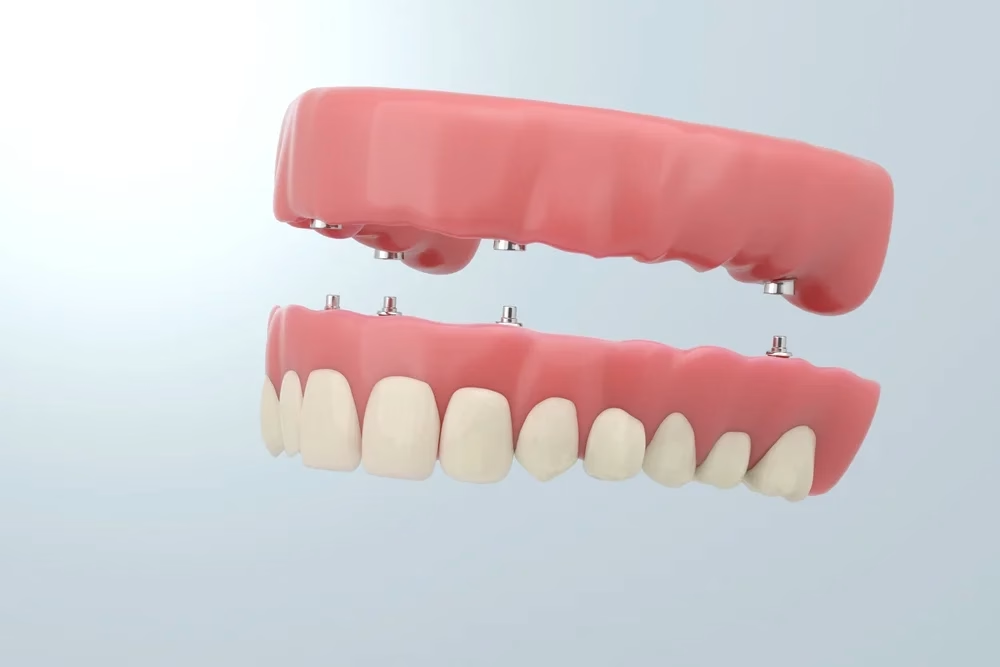
Traditional dentures rest on the gums. Implant-supported or implant-retained dentures connect to dental implants placed in the jawbone, giving the appliance additional stability.
Depending on the design, the denture may snap onto the implants and remain removable by the patient, or it may be fixed in place and removed only by a dental professional. Implant-supported options generally involve a larger initial investment than traditional dentures, but some patients consider the added stability and confidence worthwhile.
Potential advantages may include:
- Less movement during eating and speaking
- Improved confidence in social situations
- Reduced dependence on denture adhesive
- Better chewing ability for some patients
- Additional support for the jawbone around the implants
- A more secure feeling than a traditional removable denture
Not every patient is immediately ready for implant treatment. Bone volume, medical history, smoking, gum health, healing ability, and budget all influence candidacy. Dr. Alyesh provides implant and surgical dental services, allowing him to discuss whether implants should be part of the initial plan or considered later.
For some patients, starting with a traditional denture and upgrading to implant retention in the future may be a reasonable pathway. The denture should be planned with that possibility in mind whenever appropriate.
What Makes Dentures Affordable?
The word “affordable” means different things to different patients. For one person, it may mean choosing a partial denture rather than replacing several teeth with individual implants. For another, it may mean creating a phased treatment plan so the most urgent dental problems are handled first.
The total cost of dentures can depend on:
- Whether the denture is full or partial
- Whether one arch or both arches are treated
- The materials and design selected
- Whether teeth need to be extracted
- Whether bone reshaping or other preparation is required
- Whether an immediate denture is needed
- The number of adjustments included
- Whether a reline or replacement will be needed after healing
- Whether implants are used for additional support
- Dental insurance benefits and plan limitations
An advertised denture price does not always include extractions, imaging, adjustments, relines, or other necessary care. That is why comparing only the lowest number can be misleading.
Dr. Alyesh focuses on creating a complete treatment plan so patients understand what is required for their individual situation. The goal is not simply to provide the least expensive appliance. It is to provide a denture that fits the patient’s mouth, supports essential function, and represents a sensible use of the patient’s dental budget.
Why Fit Matters as Much as Appearance
A denture may look attractive but still be frustrating if it moves, pinches, or creates sore areas. Fit affects comfort, speech, chewing, and the confidence to wear the denture consistently.
Several factors influence denture stability:
- The amount and shape of supporting bone
- The health of the gums
- Saliva production
- Muscle coordination
- The relationship between the upper and lower jaws
- The accuracy of the denture impression
- The position of the replacement teeth
- Changes in the mouth after extractions
The fit can also change over time. After teeth are removed, the jawbone no longer receives the same stimulation from the tooth roots and gradually changes shape. Weight changes, health conditions, medications, and natural aging may also affect the tissues supporting a denture.
This does not mean a loose denture must simply be tolerated. Adjustments, relining, or replacement may improve comfort depending on the cause.
Creating Dentures That Look Appropriate for You
Patients often worry that dentures will look too white, too straight, or obviously artificial. Natural-looking denture design requires more than selecting replacement teeth from a catalog.
The appearance should consider:
- Tooth shade
- Tooth size and shape
- The amount of tooth visible when smiling
- Facial proportions
- Lip support
- Gum color
- Alignment
- The patient’s age and preferences
Some patients want a brighter and more uniform smile than they had before. Others want subtle variations that make the denture look more like natural teeth. Neither preference is wrong.
Dr. Alyesh discusses the patient’s expectations before the denture is completed. When the treatment process allows for a preview or try-in, the appearance and tooth arrangement may be evaluated before the final appliance is finished.
What to Expect During the Denture Process
The denture process varies depending on whether the patient still has teeth, needs extractions, or already wears an appliance. In general, treatment includes several stages.
Examination and Planning
Dr. Alyesh examines the teeth, gums, bite, and supporting bone. X-rays may be needed to evaluate remaining roots, infections, bone levels, or teeth that may require removal.
This is also when the patient’s priorities, medical history, timeline, and budget are discussed.
Preparing the Mouth
Cavities, gum disease, infections, or damaged teeth may need treatment before the final denture is made. If extractions are necessary, Dr. Alyesh explains how they fit into the timeline and whether an immediate denture is appropriate.
Impressions and Measurements
Detailed impressions or digital records are used to capture the shape of the mouth. Bite measurements help establish how the upper and lower jaws should meet. Tooth size, shade, and arrangement are also selected.
Evaluating the Design
Depending on the type of denture, there may be an appointment to evaluate the tooth arrangement before the appliance is finished. The patient can discuss appearance, and the dentist can check the bite and overall design.
Delivery and Adjustment
When the denture is delivered, Dr. Alyesh evaluates the fit, bite, appearance, and areas of pressure. Patients receive instructions for wearing, cleaning, and adapting to the new appliance.
Follow-up adjustments are a normal part of the process. A new denture should not be judged solely by how it feels during the first hour.
Learning to Eat With New Dentures
Eating with dentures is a skill that develops with practice. The mouth, tongue, and facial muscles need time to learn how to stabilize the appliance.
Patients are often more successful when they begin with softer foods cut into small pieces. Chewing slowly and using both sides of the mouth at the same time can help keep the denture balanced.
Early food choices may include:
- Eggs
- Yogurt
- Soft vegetables
- Pasta
- Rice
- Tender meat cut into small pieces
- Soup that is not excessively hot
- Soft fruit
- Oatmeal
Sticky, very hard, or difficult-to-tear foods may be challenging at first. Patients should gradually expand their diet as comfort and control improve.
A denture may increase food choices compared with having extensive missing teeth, but it will not duplicate the biting force of healthy natural teeth. Implant support may improve stability for patients who want greater chewing confidence.
Speaking Clearly With Dentures
A new denture changes the space available to the tongue, which may temporarily affect speech. Words containing sounds such as “s,” “f,” and “th” may feel unfamiliar during the first days or weeks.
Reading aloud, repeating difficult words, and speaking normally rather than excessively slowly can help the tongue adapt. Increased saliva is also common at first because the mouth recognizes the appliance as something new. This generally improves as the patient becomes accustomed to wearing it.
Persistent clicking, whistling, gagging, or difficulty speaking may indicate that the denture needs adjustment. Patients should mention these issues rather than assuming they must live with them.
Sore Spots and the Adjustment Period
New dentures can create areas of pressure as the mouth adapts. Mild awareness is expected, but sharp pain, open sores, or an inability to wear the appliance should be evaluated.
Patients should not attempt major adjustments at home. Filing or bending a denture can damage it and may make the fit worse.
When possible, wear the denture for a period before the adjustment appointment so the irritated areas are visible. This helps Dr. Alyesh identify where the appliance is placing excess pressure.
Several small adjustments may be needed, particularly after extractions. This does not necessarily mean the denture was made incorrectly. Healing tissues can change quickly, and the appliance may need to be modified as the mouth settles.
Caring for Dentures and the Tissues Underneath
Dentures collect plaque, food debris, and bacteria just as natural teeth do. Daily cleaning helps prevent odor, staining, gum irritation, and oral infections.
Good denture care generally includes:
- Removing and rinsing the denture after meals
- Brushing it with a soft denture brush
- Using a cleaner made for dentures
- Avoiding abrasive toothpaste
- Cleaning the gums, tongue, and roof of the mouth
- Keeping the denture moist when it is not being worn
- Rinsing it before placing it back in the mouth
- Attending regular dental checkups
Hot water can warp some denture materials. Household bleach and other harsh products may damage the appliance or alter its color, particularly when metal components are present.
Even patients with no natural teeth should continue seeing a dentist. The gums, bone, bite, oral tissues, and denture fit still need to be evaluated.
When an Old Denture Needs a Reline or Replacement
A denture that once fit well may gradually become loose because the mouth changes shape over time. Adhesive may provide temporary support, but increasing reliance on it can be a sign that the underlying fit needs attention.
A reline reshapes the tissue-facing surface of the denture so it conforms more closely to the gums. A reline may help when the denture remains in reasonable condition but no longer fits the changing tissues.
Replacement may be more appropriate when:
- The teeth are heavily worn
- The denture has cracked repeatedly
- The bite has changed significantly
- The base no longer fits predictably
- The appliance looks noticeably aged
- Multiple repairs have weakened it
- Facial support has decreased
- A reline would not correct the larger problem
Dr. Alyesh evaluates whether adjustment, repair, relining, or replacement provides the most reasonable value. Replacing a denture unnecessarily is not affordable, but repeatedly repairing an appliance that can no longer function well may not be economical either.
Why Pacoima Patients Choose Credit Family Dentistry
Credit Family Dentistry is located nearby in Panorama City and welcomes patients from Pacoima and surrounding San Fernando Valley communities. Patients can receive examinations, X-rays, extractions, dentures, dental implants, and ongoing general dental care through one practice.
Dr. Alyesh has more than 10 years of experience and provides general, restorative, cosmetic, implant, endodontic, and oral surgery services. This broad experience is especially useful when denture treatment involves decisions about which teeth can be saved, whether extractions are necessary, and whether implants may improve the final result.
Patients also choose the practice for:
- Personalized treatment planning
- Full and partial denture options
- Careful evaluation of remaining teeth
- Implant-supported treatment options
- A gentle, family-friendly approach
- Support for English- and Spanish-speaking patients
- Clear explanations before treatment begins
The right denture plan should fit more than the mouth. It should also make sense for the patient’s priorities, health, daily life, and available budget.
Schedule an Affordable Denture Consultation Near Pacoima, CA
If you are missing several teeth, struggling with an old denture, or preparing to have failing teeth removed, call Dr. Alyesh at (818) 895-1321 to schedule an appointment. We will evaluate your teeth and gums, explain the available denture options, and help you understand which approach best supports your comfort, appearance, function, and budget.
You should not have to keep avoiding meals, covering your smile, or worrying that your teeth will fail at the wrong moment. Let our nearby dental team help you explore an affordable, personalized denture solution designed to make everyday life easier.