


Missing teeth can affect your life every time you eat, speak, laugh, or smile. A missing tooth may seem like a small space at first, but over time it can change the way you chew, place extra pressure on nearby teeth, affect your bite, and make you feel less confident in daily conversations. For patients looking for dental implants in Pacoima, CA, Family Credit Dentistry offers personalized implant care nearby in Panorama City.
Led by Dr. Benjamin Alyesh, Family Credit Dentistry helps patients understand their options for replacing one missing tooth, several missing teeth, or teeth that may need to be removed. Dental implants are designed to replace missing tooth roots and support restorations such as crowns, bridges, or dentures, depending on the patient’s needs.
If you live in Pacoima and are dealing with a missing tooth, loose denture, damaged tooth, failing bridge, or upcoming extraction, an implant consultation can help you understand what may be possible. Dr. Alyesh evaluates the teeth, gums, jawbone, bite, existing dental work, and long-term smile goals before recommending treatment.
Dental Implant Care Near Pacoima
Family Credit Dentistry is located at 8628 Van Nuys Blvd #200 in Panorama City, close to Pacoima and surrounding San Fernando Valley communities. Patients from Pacoima often visit from areas near Van Nuys Boulevard, Laurel Canyon Boulevard, Paxton Street, Osborne Street, Glenoaks Boulevard, and nearby residential neighborhoods.
Dental implant treatment is not just about replacing the visible part of a missing tooth. It involves evaluating bone support, gum health, bite pressure, healing ability, and the type of final restoration that will work best for the patient. Dr. Alyesh takes time to explain the process so patients understand whether implants are appropriate, what steps may be needed first, and how the final result is designed to function.
Family Credit Dentistry also offers related services that often connect with implant planning, including CBCT dental cone beam imaging, dental bridges, dentures, tooth extractions, sinus augmentation, PRP and PRF treatment, crowns, and restorative dentistry. This allows Pacoima patients to have a more complete conversation about tooth replacement instead of being limited to only one option.
What Are Dental Implants?
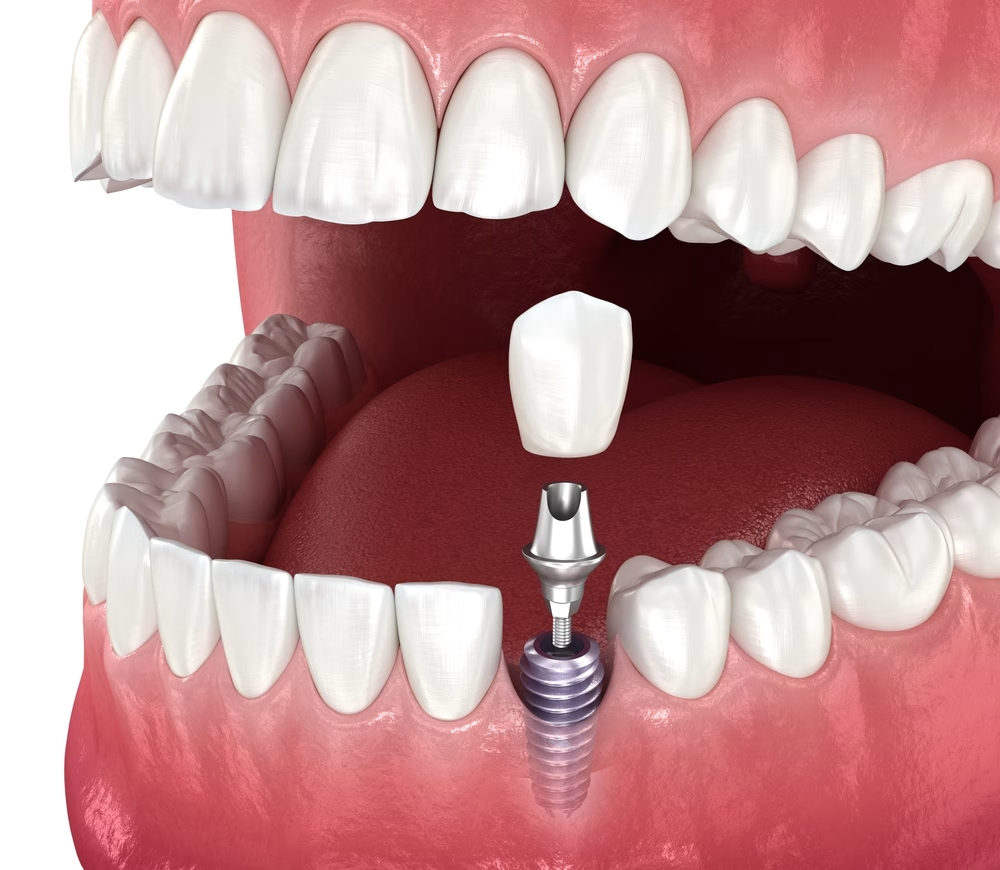
A dental implant is a small biocompatible post placed into the jawbone to replace the root of a missing tooth. After the implant heals and integrates with the surrounding bone, it can support a crown, bridge, or denture.
This is what makes dental implants different from many traditional tooth replacement options. They do not only replace the visible part of the tooth above the gums. They also provide support below the gumline where the natural tooth root used to be.
For one missing tooth, an implant may support a single crown. For several missing teeth, implants may support a bridge. For patients missing most or all of their teeth, implants may help support a denture and improve stability.
Why Replacing a Missing Tooth Matters
A missing tooth may not hurt, but that does not mean the space should be ignored. When a tooth is lost, nearby teeth can gradually shift into the open area. The bite may change, chewing pressure can become uneven, and food may get trapped more easily.
Missing teeth can also affect confidence. Even when the missing tooth is toward the back of the mouth, it can still affect how comfortably you chew and how much stress is placed on the remaining teeth.
Dr. Alyesh helps patients look at the full effect of tooth loss. For many Pacoima patients, replacing a missing tooth is not only about appearance. It can also help protect bite stability, chewing comfort, and long-term oral health.
Benefits of Dental Implants
Dental implants can offer several important benefits for the right patient. They are designed to feel stable, support chewing, and blend naturally with the rest of the smile when restored properly.
For many patients, implants feel more secure than removable tooth replacement options because they are anchored in the jawbone. This can make eating, speaking, and smiling feel more natural.
Implants may also help preserve nearby teeth. A traditional dental bridge often uses neighboring teeth for support, while a single dental implant may replace one missing tooth without placing the same type of support demand on adjacent teeth. The right choice depends on the patient’s mouth, health, and treatment goals.
Who Is a Good Candidate for Dental Implants?
A good dental implant candidate usually has healthy gums, enough jawbone to support an implant, and overall health that allows proper healing. The patient also needs to maintain good oral hygiene and return for routine dental visits.
Not every patient is ready for an implant right away. Some patients may need gum treatment, an extraction, sinus augmentation, additional healing, or another preparatory step before implant placement can be considered. Smoking, uncontrolled medical conditions, active infection, and severe bone loss can also affect candidacy.
Dr. Alyesh evaluates each patient individually. Instead of giving a generic answer, he uses an exam, imaging, and the patient’s health history to determine whether implants are a good option and what steps may be needed first.
Dental Implants for One Missing Tooth
When one tooth is missing, a dental implant may be used to support a single crown. This option can restore the visible tooth while also replacing the missing root structure below the gums.
A single implant crown may be a strong choice when the neighboring teeth are healthy and do not need crowns themselves. It can help restore chewing function and appearance without using a removable appliance.
Dr. Alyesh evaluates the space, bone support, gum tissue, bite pressure, and adjacent teeth before recommending a single implant. The goal is a replacement tooth that looks natural, feels comfortable, and works properly with the rest of the bite.
Dental Implants for Multiple Missing Teeth
Patients missing several teeth may have more than one replacement option. Depending on the number and location of the missing teeth, implants may support individual crowns, an implant-supported bridge, or a larger restoration.
An implant-supported bridge can sometimes replace multiple missing teeth without placing an implant for every tooth. This type of planning depends on available bone, bite strength, tooth position, gum health, and the design of the final restoration.
Dr. Alyesh helps patients compare implants, bridges, partial dentures, and other replacement options. The right treatment is the one that fits the patient’s mouth, health, comfort, budget, and long-term maintenance needs.
Implant-Supported Dentures
Patients who struggle with loose or uncomfortable dentures may benefit from discussing implant-supported dentures. Traditional dentures rest on the gums, while implant-supported dentures use dental implants for added stability.
This can make a meaningful difference for patients who have trouble chewing, speaking, or feeling confident with removable dentures. Implant support may reduce movement and help the denture feel more secure.
Not every denture patient is automatically a candidate for implant-supported dentures. Dr. Alyesh evaluates bone support, gum health, current denture fit, bite forces, and medical history before explaining whether this option may be appropriate.
Dental Implants After Tooth Extraction
Sometimes a tooth must be removed because it is badly broken, infected, loose, or no longer restorable. When extraction is needed, it is helpful to discuss replacement options before or shortly after the tooth is removed.
In some cases, implant planning may begin before extraction. In other cases, the area may need time to heal first. The timing depends on the condition of the tooth, the amount of infection, the surrounding bone, the gum tissue, and the patient’s overall health.
Dr. Alyesh can explain whether a dental implant may be a future option after extraction. Planning ahead helps patients understand the full path from tooth removal to replacement instead of feeling uncertain after the extraction is complete.
Bone Support and Dental Implants
Dental implants need a stable foundation. If the jawbone has changed after tooth loss, gum disease, trauma, infection, or long-term denture wear, additional treatment may be needed before implant placement.
Bone loss does not always mean implants are impossible. It means the area needs careful evaluation. Some patients may benefit from preparatory treatment to improve support for the implant.
Family Credit Dentistry offers implant-related planning with advanced imaging and related surgical services. Dr. Alyesh can review the condition of the jawbone and explain whether the area appears ready for implant treatment or whether another step may be needed first.
Sinus Augmentation for Upper Dental Implants
When missing teeth are in the upper back jaw, the sinus may sit close to the area where an implant would need to be placed. If there is not enough bone height between the mouth and sinus, a sinus augmentation may be recommended.
A sinus augmentation is designed to create better support for future implant placement in the upper jaw. This can be especially important for patients who have been missing upper molars or premolars for a long time.
Dr. Alyesh can use imaging and clinical evaluation to determine whether sinus augmentation may be needed. For Pacoima patients who were previously told they did not have enough bone for implants, this type of evaluation may help clarify whether implant treatment is still possible.
CBCT Imaging for Dental Implant Planning
CBCT dental cone beam imaging provides detailed 3D views of the jawbone, teeth, nerves, sinuses, and surrounding structures. This information can be especially useful for dental implant planning because it helps evaluate bone height, width, density, and nearby anatomy.
Traditional dental X-rays are helpful, but implant planning often benefits from a more complete view. With 3D imaging, Dr. Alyesh can better understand the shape and condition of the implant site before recommending treatment.
For patients, CBCT imaging can also make the process easier to understand. Instead of discussing implant planning in general terms, Dr. Alyesh can explain what the images show and how that information affects the treatment plan.
PRP and PRF in Implant-Related Care
Dental PRP and PRF treatments use components from the patient’s own blood to support healing after certain dental procedures. These options may be discussed in connection with extractions, implant-related care, and other procedures where tissue healing is important.
Not every implant case requires PRP or PRF. When it may be helpful, Dr. Alyesh can explain how it fits into the larger treatment plan and why it may be recommended.
Implant dentistry depends on more than placing a post. It also depends on healthy healing, stable gum tissue, proper restoration, and long-term maintenance. PRP and PRF may be part of supporting that larger goal in selected cases.
The Dental Implant Process
The dental implant process usually begins with a consultation and exam. Dr. Alyesh evaluates the missing tooth area, reviews symptoms or concerns, takes appropriate imaging, and discusses the patient’s goals.
If the patient is a candidate, the next step may involve preparing the site, placing the implant, allowing time for healing and integration, and restoring the implant with a crown, bridge, or denture. The exact sequence depends on the patient’s needs.
Some patients need extractions, gum treatment, sinus augmentation, or additional healing before implant placement. Others may already have a healed space that can be evaluated for implant treatment. Dr. Alyesh explains the sequence clearly so patients know what to expect before beginning.
How Long Do Dental Implants Take?
The timeline for dental implant treatment can vary. Some cases are more straightforward, while others require extraction healing, sinus augmentation, gum treatment, or additional planning before the implant can be restored.
In many cases, time is needed for the implant to integrate with the jawbone before the final restoration is attached. This healing period is important because the implant needs a stable foundation before it can support normal chewing forces.
During the consultation, Dr. Alyesh can give a more realistic timeline based on the patient’s mouth, imaging, health, and treatment goals. A careful plan is more important than rushing the process.
Are Dental Implants Comfortable?
Many patients feel nervous about implant treatment, especially if they have had difficult dental experiences in the past. Dr. Alyesh’s approach is centered on clear communication, patient comfort, and helping each person understand the steps before treatment begins.
Local anesthesia is typically used during implant-related procedures, and sedation options may be discussed for selected patients who feel anxious or need more involved treatment. Family Credit Dentistry also offers IV sedation, which may be appropriate in certain cases depending on health history and treatment needs.
Comfort starts before the procedure. When patients understand what is happening and why, the experience often feels less intimidating. Dr. Alyesh takes time to answer questions and explain the plan in a way that feels approachable.
Dental Implants vs. Bridges
Dental implants and bridges can both replace missing teeth, but they work differently. A bridge usually uses neighboring teeth or implants for support, while a single dental implant replaces the missing tooth root and supports its own crown.
A bridge may be a good option when neighboring teeth already need crowns or when an implant is not the best fit. An implant may be preferred when the surrounding teeth are healthy and there is enough bone support for placement.
Dr. Alyesh compares these options based on the patient’s actual condition. The goal is not to push one treatment for every patient, but to help each person choose the most appropriate way to restore the smile.
Dental Implants vs. Dentures
Dentures can replace multiple missing teeth or a full arch of missing teeth. They may be removable, partial, full, or supported by implants. Traditional dentures rest on the gums, while implant-supported dentures use implants to improve stability.
Some patients do well with traditional dentures. Others want more support because their denture moves when they eat or speak. Implant-supported options may help improve confidence and comfort for the right patient.
Dr. Alyesh can evaluate the fit of an existing denture or discuss replacement options if a patient is missing many teeth. The right choice depends on oral health, bone support, expectations, comfort, and budget.
Caring for Dental Implants
Dental implants require regular care, just like natural teeth and other dental restorations. Patients still need to brush, clean around the implant, maintain healthy gums, and visit the dentist for ongoing exams and cleanings.
Although the implant itself cannot get a cavity, the surrounding gum and bone tissue must stay healthy. Inflammation around an implant can create problems if it is not addressed early.
Dr. Alyesh helps patients understand how to protect their implant investment. Good home care, routine cleanings, and regular monitoring are important parts of keeping implants healthy over time.
Why Pacoima Patients Choose Family Credit Dentistry
Pacoima patients often choose Family Credit Dentistry because the office is nearby, welcoming, bilingual, and able to provide a wide range of related dental services. Implant care often connects with other needs, such as extractions, sinus augmentation, dentures, bridges, crowns, gum care, and imaging.
Dr. Alyesh brings more than 10 years of experience and a gentle, detail-oriented approach to treatment planning. He provides general dentistry, cosmetic dentistry, dental implants, endodontics, and oral surgery, allowing patients to receive guidance across multiple areas of care.
Family Credit Dentistry is also a bilingual office serving both English-speaking and Spanish-speaking patients. That matters because implant treatment involves important decisions, and patients deserve to understand their options clearly before moving forward.
Schedule a Dental Implant Consultation Near Pacoima, CA
If you are looking for dental implants in Pacoima, CA, Family Credit Dentistry is here to help you understand your options. Whether you are missing one tooth, several teeth, wearing a loose denture, preparing for an extraction, or wondering if you have enough bone for implants, Dr. Alyesh can evaluate your smile and explain the next step.
Family Credit Dentistry is located at 8628 Van Nuys Blvd #200 in Panorama City, CA 91402, close to Pacoima and nearby San Fernando Valley communities. Call (818) 895-1321 to schedule a dental implant consultation and learn whether implants may be the right choice for your smile.