


Dental Bridges Treatment Near Van Nuys, CA
A missing tooth can affect more than the way your smile looks. It can change how you chew, how you speak, how your bite feels, and how confident you feel around other people. Over time, the teeth next to the empty space may also begin to shift, which can create new problems with spacing, bite balance, and oral health.
Family Credit Dentistry provides dental bridges treatment near Van Nuys, CA for patients who want to replace one or more missing teeth with a stable, natural-looking restoration. A dental bridge fills the gap left by a missing tooth using an artificial tooth supported by nearby teeth or dental implants. The goal is to restore your smile, improve chewing, and help protect the alignment of the surrounding teeth.
Dr. Alyesh takes a personalized approach to restorative dentistry. He examines your teeth, gums, bite, and missing tooth space before recommending a bridge. Some patients are good candidates for a traditional dental bridge. Others may benefit from an implant-supported bridge, dental implant, or partial denture. The right option depends on your oral health, goals, budget, timeline, and long-term needs.
If you are searching for dental bridges in Van Nuys, CA, Family Credit Dentistry welcomes patients from Van Nuys, Panorama City, North Hills, Arleta, Mission Hills, Pacoima, Granada Hills, San Fernando, and nearby San Fernando Valley communities.
Call Dr. Alyesh at (818) 895-1321 to schedule an appointment.
What Is a Dental Bridge?
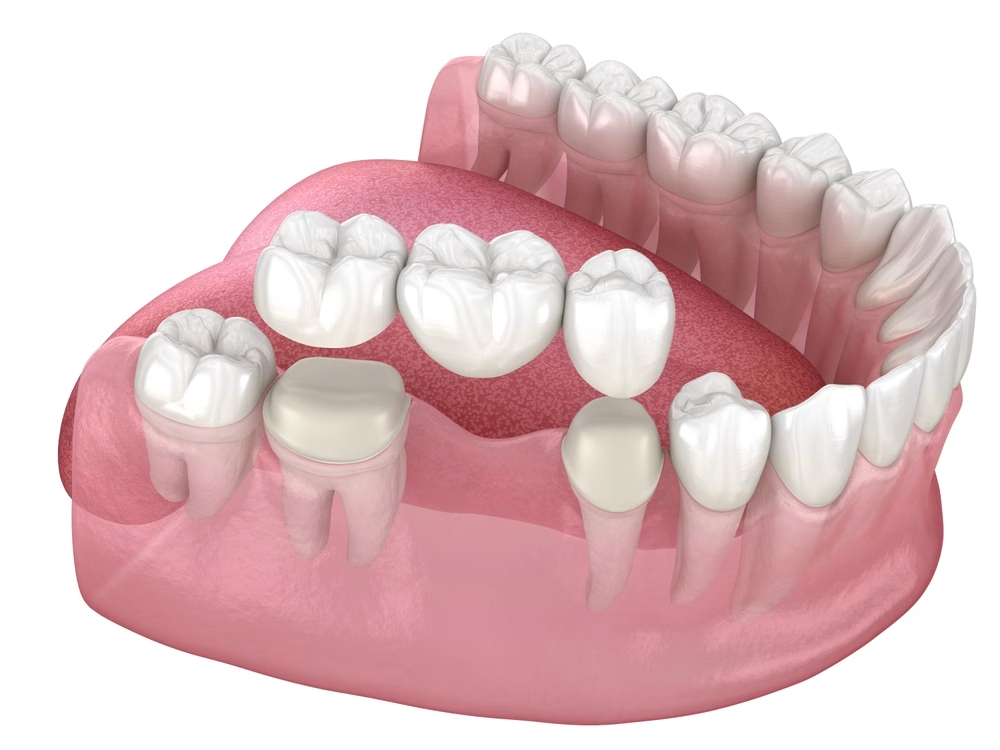
A dental bridge is a fixed dental restoration used to replace one or more missing teeth. It literally bridges the gap between teeth. A traditional bridge usually includes one or more artificial teeth, called pontics, connected to crowns that are placed on the natural teeth on each side of the space.
The teeth that support the bridge are called abutment teeth. These teeth are prepared for crowns, and the artificial replacement tooth sits between them. Once the bridge is cemented in place, it does not come in and out like a removable partial denture.
Dental bridges can restore the look of a missing tooth, but they also help with function. A missing tooth can make chewing uneven, change speech, and allow neighboring teeth to drift. A bridge helps fill the space so your bite feels more complete.
Dr. Alyesh will explain whether a bridge is appropriate for your mouth after an exam. He looks at the strength of the neighboring teeth, gum health, bone support, bite pressure, and the location of the missing tooth before recommending treatment.
Why Replace a Missing Tooth?
A missing tooth may seem like only a cosmetic concern, especially if it is not visible when you smile. But every tooth plays a role in the way your mouth functions. When one tooth is missing, the surrounding teeth may begin to shift into the empty space.
Shifting teeth can create new gaps, crowding, bite changes, food trapping, and harder-to-clean areas. The opposing tooth may also move because it no longer has a tooth to bite against. Over time, this can affect chewing comfort and make future dental treatment more complicated.
Missing teeth can also place extra pressure on the remaining teeth. If you avoid chewing on one side, the other side may take more force than it should. This can contribute to wear, cracks, jaw discomfort, and bite imbalance.
Replacing a missing tooth with a dental bridge can help restore chewing function, support the bite, and improve the appearance of your smile. It can also help prevent neighboring teeth from drifting out of position.
Who Is a Good Candidate for a Dental Bridge?
A good candidate for a dental bridge is usually missing one or more teeth and has healthy enough neighboring teeth to support the bridge. The supporting teeth need to be strong enough for crowns and stable enough to handle chewing pressure.
Your gums also need to be healthy. If there is active gum disease, deep pockets, or poor bone support around the abutment teeth, that should be treated before a bridge is placed. A bridge is only as strong as the foundation supporting it.
Dr. Alyesh will examine your mouth, review X-rays, and evaluate your bite. He will look at the missing tooth space, the teeth next to it, the health of the gums, and whether the replacement tooth will have enough support.
A bridge may not be the right option if the neighboring teeth are weak, loose, badly decayed, or already overloaded. In those cases, a dental implant, implant-supported bridge, or partial denture may be a better choice.
Types of Dental Bridges
There are several types of dental bridges, and the right one depends on the number of missing teeth, the condition of nearby teeth, and the available support.
A traditional dental bridge is the most common type. It uses crowns on the teeth on both sides of the gap to support the replacement tooth. This option is often used when there are healthy teeth on both sides of the missing tooth space.
A cantilever bridge is supported by a crown on only one side of the missing tooth. This type is used less often because it can place more pressure on the supporting tooth. Dr. Alyesh will only recommend it when the bite and tooth position make sense.
A Maryland bridge uses a replacement tooth with small wings bonded to the backs of nearby teeth. It may require less tooth preparation, but it is not appropriate for every area of the mouth, especially where chewing forces are heavy.
An implant-supported bridge uses dental implants instead of natural teeth for support. This can be a strong option when multiple teeth are missing or when the surrounding teeth are not ideal for crowns.
Traditional Dental Bridges Near Van Nuys
A traditional dental bridge is often used when a patient is missing one tooth and has healthy natural teeth on both sides of the space. These neighboring teeth are prepared for crowns, and the replacement tooth is attached between them.
This type of bridge is fixed in place, which means you do not remove it at night. It can feel more stable than a removable partial denture and can restore the appearance of the missing tooth in a natural-looking way.
The bridge is custom-designed to match your bite and smile. Dr. Alyesh considers the shape, shade, size, and position of the replacement tooth so it blends with the surrounding teeth. The bite also needs to be adjusted carefully so the bridge feels comfortable when chewing.
A traditional bridge may be a good choice when the neighboring teeth already need crowns or have large restorations. If the neighboring teeth are completely healthy and untouched, Dr. Alyesh may also discuss dental implants as a more conservative option for those teeth.
Implant-Supported Bridges
An implant-supported bridge is supported by dental implants instead of natural teeth. This option may be used when several teeth are missing in a row or when the nearby natural teeth are not strong enough to support a traditional bridge.
Dental implants act like artificial tooth roots. Once they are placed and healed, they can support a bridge that replaces multiple missing teeth. This can help restore chewing function without relying on natural teeth for support.
Implant-supported bridges require enough healthy bone and gums to support the implants. Some patients may need bone grafting or additional planning before implant placement. The timeline is usually longer than a traditional bridge because implants need time to heal.
Dr. Alyesh provides dental implant care and restorative treatment, which allows him to help patients think through both the surgical and restorative parts of the plan. He can explain whether an implant-supported bridge is possible or whether another replacement option makes more sense.
Dental Bridge vs. Dental Implant
A dental bridge and a dental implant can both replace a missing tooth, but they work differently. A bridge fills the gap by attaching to nearby teeth or implants. A dental implant replaces the missing tooth root with a post placed in the jawbone, then supports a crown.
A traditional bridge may be faster than an implant and may be a good option when the neighboring teeth already need crowns. It does not require implant surgery, which can make it appealing for some patients.
A dental implant does not require reshaping the teeth next to the missing tooth. It also helps replace the root structure, which can support the bone in the area. However, implants require surgery, enough bone, and a longer treatment timeline.
Neither option is automatically better for everyone. Dr. Alyesh will compare the condition of your teeth, gums, bone, bite, and goals before recommending a bridge, implant, or another replacement option.
Dental Bridge vs. Partial Denture
A dental bridge is fixed in place, while a partial denture is removable. Both can replace missing teeth, but they feel and function differently.
A bridge is attached to supporting teeth or implants and is not removed for cleaning. It usually feels more stable than a removable partial denture. Many patients like that a bridge stays in place when speaking and chewing.
A partial denture can replace multiple missing teeth in different areas of the mouth. It may be a more affordable option for some patients and may be easier to modify if more teeth are lost later. However, it must be removed for cleaning and may not feel as secure as a fixed bridge.
Dr. Alyesh will explain the pros and limitations of each option. The right choice depends on how many teeth are missing, where they are located, the health of the remaining teeth, budget, and personal preference.
Dental Bridge vs. Crown
A crown covers and protects one tooth. A bridge replaces one or more missing teeth. These treatments are related because a traditional bridge often uses crowns on the supporting teeth.
If a tooth is damaged but still present, a crown may be used to restore it. If a tooth is missing, a bridge may be used to fill the gap. In a traditional bridge, the crowns on the neighboring teeth hold the replacement tooth in place.
Dr. Alyesh may recommend crowns only, a bridge, an implant, or another restoration depending on your situation. The diagnosis matters because the treatment should match the problem.
For example, a cracked tooth may need a crown. A missing tooth may need a bridge. A missing tooth next to a damaged tooth may need a more detailed plan that restores both appearance and function.
What Happens During a Dental Bridge Consultation?
A dental bridge consultation begins with a conversation about your missing tooth, symptoms, goals, and concerns. Dr. Alyesh will ask how long the tooth has been missing, whether you have trouble chewing, and whether you are interested in a fixed or removable option.
Next, he examines the teeth, gums, bite, and missing tooth space. X-rays may be taken to evaluate the roots, bone levels, and health of the neighboring teeth. This step is important because a bridge needs strong support.
Dr. Alyesh will then explain whether a bridge is a good option. If the supporting teeth are healthy enough, he may discuss a traditional bridge. If the teeth are not ideal supports, he may discuss implants, partial dentures, or other restorative options.
This visit is also the right time to ask questions about cost, timing, materials, appearance, comfort, and how to clean around a bridge. You should understand both the benefits and responsibilities before moving forward.
What Is the Dental Bridge Process?
The dental bridge process usually takes more than one visit. The first step is planning. Dr. Alyesh evaluates the missing tooth area and prepares the supporting teeth if a traditional bridge is recommended.
For a traditional bridge, the teeth on each side of the space are shaped so crowns can fit over them. Impressions or digital records are then taken so the custom bridge can be made. A temporary bridge may be placed to protect the prepared teeth and maintain appearance while the final bridge is being created.
When the final bridge is ready, Dr. Alyesh checks the fit, shape, shade, and bite. The bridge should look natural, feel comfortable, and allow you to chew without uneven pressure. Adjustments may be made before the bridge is permanently cemented.
After the bridge is placed, Dr. Alyesh will explain how to care for it at home. Cleaning under and around the bridge is especially important because the bridge depends on healthy supporting teeth and gums.
Do Dental Bridges Look Natural?
Dental bridges can look very natural when they are designed carefully. The replacement tooth should match the size, shape, and shade of the surrounding teeth. The gumline, smile line, and bite also need to be considered.
A bridge in the front of the mouth requires special attention because it is visible when you smile and speak. The shade and shape must blend with the neighboring teeth so the restoration does not stand out.
A bridge in the back of the mouth still needs careful design. Even if it is less visible, it must handle chewing forces and fit comfortably with the opposing teeth. Function matters just as much as appearance.
Dr. Alyesh focuses on creating restorations that look good and feel right. A dental bridge should restore confidence without feeling bulky, awkward, or artificial.
How Long Do Dental Bridges Last?
Dental bridges can last for many years with good care, but they do not last forever. Their lifespan depends on oral hygiene, bite pressure, bridge material, gum health, the strength of the supporting teeth, diet, and regular dental visits.
The bridge itself cannot get a cavity, but the natural teeth supporting it still can. Decay can form at the edges of the crowns if plaque is not controlled. Gum disease can also weaken the support around the bridge.
Patients who grind or clench may place extra pressure on a bridge. If Dr. Alyesh sees signs of grinding, he may recommend a nightguard to help protect the bridge and the natural teeth.
Regular checkups help Dr. Alyesh monitor the bridge, supporting teeth, gums, and bite. Small issues are easier to manage when they are caught early.
How to Care for a Dental Bridge
Caring for a dental bridge is important because the bridge depends on the health of the surrounding teeth and gums. You should brush twice a day, floss daily, and keep regular dental cleaning appointments.
Cleaning under the replacement tooth requires special technique. Traditional floss cannot pass straight down between the connected bridge units, so a floss threader, interdental brush, or water flosser may be recommended. Dr. Alyesh or the dental team can show you how to clean under the bridge properly.
Food and plaque can collect around the bridge if it is not cleaned well. This can lead to bad breath, gum irritation, decay on the supporting teeth, or bridge failure. Good home care is one of the best ways to protect your investment.
Avoid chewing hard objects like ice, pens, or hard candy. If your bridge ever feels loose, painful, rough, or high when you bite, call the office for an evaluation.
Can a Bridge Replace More Than One Tooth?
Yes, a dental bridge can replace more than one missing tooth in some cases. The number of teeth that can be replaced depends on the location of the missing teeth, the strength of the supporting teeth, bite forces, and whether dental implants are used.
A traditional bridge may be used for one missing tooth or sometimes more, but the longer the span, the more pressure is placed on the supporting teeth. If several teeth are missing, an implant-supported bridge may be a stronger and more stable option.
Dr. Alyesh will evaluate the missing tooth space and explain what is realistic. A bridge should not simply fill the gap. It should be designed to handle daily chewing and protect the rest of the mouth.
If multiple teeth are missing in different areas, a partial denture, implants, or a combination of treatments may be recommended instead.
Can You Eat Normally With a Dental Bridge?
A dental bridge can help restore chewing ability, but it may take a short time to adjust. Once the bridge is placed and the bite feels comfortable, many patients can eat a wider variety of foods than they could with a missing tooth.
At first, softer foods may feel easier while you get used to the bridge. Chewing evenly and avoiding very hard or sticky foods can help protect the restoration. Dr. Alyesh will let you know if there are any specific foods to avoid based on your bridge.
A bridge should not feel painful when chewing. If it does, the bite may need adjustment or the supporting teeth may need evaluation. Do not ignore discomfort that continues.
The goal is to restore function in a way that feels natural. A well-designed bridge should help you chew more comfortably and smile with more confidence.
What If My Old Dental Bridge Is Loose or Broken?
An old bridge may need repair or replacement if it feels loose, traps food, causes discomfort, has a bad taste or odor around it, or shows visible damage. Sometimes a bridge becomes loose because the cement has weakened. Other times, decay or gum disease affects the supporting teeth.
Do not try to glue a bridge back in at home. Household adhesives are not safe for dental use and can damage the teeth or gums. A loose bridge should be evaluated by a dentist.
Dr. Alyesh will examine the bridge, supporting teeth, gums, and X-rays when needed. If the bridge is still in good condition and the supporting teeth are healthy, it may be possible to re-cement it. If there is decay, fracture, or poor fit, a new bridge or different treatment may be needed.
Early evaluation can help prevent a loose bridge from turning into a bigger problem. If your bridge moves, call the office.
Why Choose Family Credit Dentistry for Dental Bridges Near Van Nuys?
Dental bridges require careful planning because they affect your smile, bite, chewing, and long-term oral health. A good bridge should look natural, feel stable, and protect the teeth that support it.
Dr. Alyesh brings over 10 years of experience and provides comprehensive dental care, including general dentistry, cosmetic dentistry, dental implants, endodontics, and oral surgery. His broad background helps him evaluate whether a bridge, implant, crown, or partial denture is the best option for your situation.
Patients appreciate his gentle approach, attention to detail, and use of modern dental technology. He focuses on personalized treatment plans rather than one-size-fits-all dentistry. If a bridge is the right option, he will explain why. If another treatment would be healthier or more conservative, he will explain that too.
Family Credit Dentistry is also a bilingual office serving both English-speaking and Spanish-speaking patients. Clear communication matters because replacing a missing tooth is an important long-term decision.
Schedule Dental Bridges Treatment Near Van Nuys, CA
If you are missing a tooth or have been told a tooth may need to be removed, it is worth discussing replacement options early. A dental bridge may help restore your smile, improve chewing, and prevent nearby teeth from shifting.
Family Credit Dentistry provides dental bridges treatment near Van Nuys, CA with gentle care and personalized planning. Dr. Alyesh will examine your teeth, review your options, and help you decide whether a bridge is the right choice for your smile.
Whether you need to replace one missing tooth, repair an old bridge, or compare bridges with dental implants, the team is here to help. Family Credit Dentistry welcomes patients from Van Nuys, Panorama City, North Hills, Arleta, Mission Hills, Pacoima, Granada Hills, San Fernando, and nearby communities.
Call Dr. Alyesh at (818) 895-1321 to schedule an appointment.