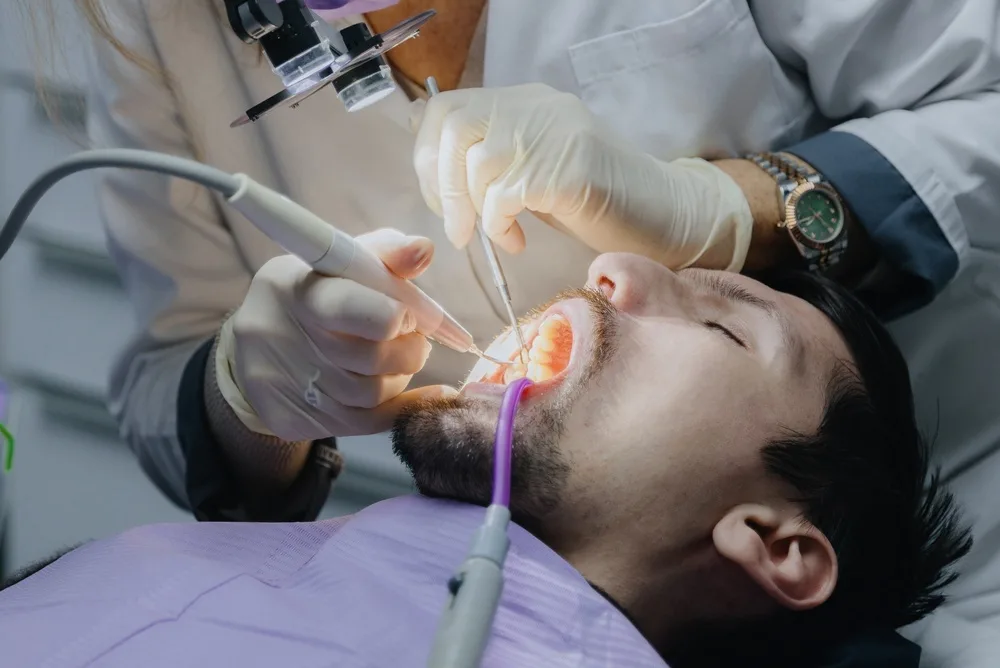



A dental emergency can interrupt everything. One moment you are eating, working, driving, or getting ready for bed. The next moment, a tooth starts throbbing, a crown comes loose, a filling falls out, swelling appears near the gums, or a tooth cracks unexpectedly. When pain or damage suddenly becomes hard to ignore, patients looking for emergency dental services in Van Nuys, CA need a nearby dental office that can help them understand what is happening and what to do next.
Family Credit Dentistry is located nearby in Panorama City on Van Nuys Boulevard, making the office a convenient choice for patients throughout Van Nuys and the surrounding San Fernando Valley. Our team helps with urgent dental evaluations, dental X-rays, tooth pain, broken teeth, lost crowns, damaged fillings, root canal treatment, tooth extractions, wisdom tooth pain, dental infections, and other concerns that may need prompt attention.
Led by Dr. Benjamin Alyesh, Family Credit Dentistry provides calm, patient-centered dental care for people who are dealing with pain, pressure, swelling, damaged dental work, or dental trauma. Dr. Alyesh has more than 10 years of experience and is known for his gentle approach, attention to detail, and commitment to helping patients feel comfortable during stressful dental visits.
Emergency Dental Care Near Van Nuys
Family Credit Dentistry is located at 8628 Van Nuys Blvd #200 in Panorama City, close to Van Nuys, North Hills, Arleta, Pacoima, Mission Hills, Lake Balboa, Sherman Oaks, and surrounding communities. For patients near Victory Boulevard, Sherman Way, Van Nuys Boulevard, Sepulveda Boulevard, Oxnard Street, Burbank Boulevard, or the Van Nuys Civic Center area, the office is close enough to call when dental pain or injury needs attention.
Emergency dentistry is not only about relieving pain for the moment. It is about finding the cause of the problem and protecting the tooth, gums, jaw, and surrounding tissues from additional damage. A severe toothache may be caused by deep decay, infection, a cracked tooth, gum inflammation, dental trauma, or a failing restoration. Swelling may point to infection. A broken tooth may expose sensitive inner layers. A lost crown or filling may leave the tooth vulnerable.
Dr. Alyesh begins with an evaluation, appropriate imaging, and a clear explanation of what he sees. From there, he can recommend the treatment that best protects your comfort, health, and long-term smile.
What Counts as a Dental Emergency?
A dental emergency is usually any dental problem that needs prompt attention because of severe pain, infection, swelling, bleeding, trauma, or the risk of losing a tooth. Common dental emergencies include intense toothaches, dental abscesses, cracked teeth, broken teeth, knocked-out teeth, loose adult teeth, lost crowns, lost fillings, gum swelling, injuries to the mouth, and wisdom tooth pain.
Some symptoms should be treated as medical emergencies. If swelling affects breathing or swallowing, bleeding will not stop, there is major facial trauma, you suspect a broken jaw, or you have fever with spreading facial swelling, seek emergency medical care right away. A dental office can handle many urgent tooth-related problems, but potentially dangerous medical symptoms should be evaluated immediately.
If the problem is tooth-specific, such as a painful tooth, broken tooth, lost crown, dental abscess, damaged filling, or wisdom tooth flare-up, call Family Credit Dentistry so the area can be evaluated and the cause of the problem can be identified.
Severe Tooth Pain
Severe tooth pain is one of the most common reasons patients search for emergency dental services near Van Nuys. Tooth pain may begin as mild sensitivity and then become sharp, throbbing, constant, or difficult to tolerate. It may worsen when biting, lying down, drinking something hot or cold, or touching the tooth.
Tooth pain can have several causes. Deep decay may irritate or infect the nerve inside the tooth. A cracked tooth may flex under chewing pressure and create sharp pain. Gum infection may cause tenderness, swelling, or pressure around the tooth. An old filling or crown may fail and allow bacteria to reach deeper areas.
Dr. Alyesh can evaluate the painful tooth, take X-rays if needed, and determine whether treatment may involve a filling, crown, root canal, extraction, or another option. The goal is not simply to cover up the pain. The goal is to understand why the pain is happening and treat the underlying issue.
Dental Abscesses and Swelling
Swelling around the gums, face, or jaw can be a sign of infection and should not be ignored. A dental abscess may cause pain, pressure, a bad taste in the mouth, pus near the gums, sensitivity, fever, or swelling that becomes more noticeable over time.
An abscess can develop when bacteria reach the inside of a tooth or the surrounding gum and bone. In some cases, the tooth may need root canal treatment to remove infection from inside the tooth. In other cases, extraction may be necessary if the tooth cannot be saved.
Localized dental swelling should be evaluated as soon as possible. If swelling spreads, affects your ability to breathe or swallow, or is accompanied by fever and feeling very unwell, seek emergency medical care. For tooth-related swelling, call Family Credit Dentistry so Dr. Alyesh can evaluate the tooth and surrounding area.
Broken, Cracked, or Chipped Teeth
A broken or cracked tooth can happen from biting something hard, grinding, trauma, weakened enamel, old fillings, or untreated decay. Sometimes a tooth breaks suddenly. Other times, a crack develops slowly and becomes painful only when chewing.
A small chip may not always feel urgent, but deeper cracks can expose sensitive layers of the tooth or allow bacteria to enter. A tooth that hurts when biting, feels sharp to the tongue, or has a visible fracture should be checked before the damage becomes worse.
Depending on the severity, Dr. Alyesh may recommend smoothing the area, a filling, bonding, a crown, root canal treatment, or extraction if the fracture extends too deeply. The sooner a broken tooth is evaluated, the more options may be available to protect it.
Knocked-Out Teeth
A knocked-out permanent tooth is one of the most time-sensitive dental emergencies. The American Dental Association advises keeping a knocked-out adult tooth moist at all times. If possible, place it back in the socket without touching the root. If that is not possible, keep it between the cheek and gums, in milk, or in a tooth preservation product, then get to the dentist right away.
If a permanent tooth is knocked out, handle it by the crown, which is the part normally visible in the mouth. Avoid touching or scrubbing the root. If the tooth is dirty, rinse it gently, but do not remove attached tissue.
Time matters. Even if saving the tooth is not possible, prompt care can help protect the socket, manage pain, check for surrounding injuries, and discuss future tooth replacement options.
Lost Fillings or Lost Crowns
A lost filling or crown can quickly become uncomfortable because the exposed tooth may be sensitive to temperature, air, pressure, or food. Even if there is no pain, the tooth may be more vulnerable to decay, fracture, or further irritation.
If a crown comes off, keep it in a safe place and call the office. Do not use household glue or try to permanently attach it yourself. If the tooth is sharp, sensitive, or painful, it should be evaluated promptly.
Dr. Alyesh can examine the tooth and determine whether the crown or filling can be repaired, replaced, recemented, or whether the tooth needs additional treatment first. Sometimes a lost crown reveals decay or damage underneath that must be treated before a new restoration is placed.
Wisdom Tooth Pain
Wisdom teeth can become painful when they are impacted, partially erupted, infected, or difficult to clean. Pain may occur near the back of the mouth, jaw, ear, throat, or nearby teeth. The gum tissue around the wisdom tooth may feel swollen or tender, and chewing may become uncomfortable.
If a wisdom tooth is partially covered by gum tissue, bacteria and food can collect around it. This may lead to inflammation, infection, or repeated flare-ups. Some wisdom teeth also press against nearby teeth or develop decay because they are difficult to brush and floss.
Family Credit Dentistry provides wisdom tooth evaluations and extractions. Dr. Alyesh can use an exam and imaging to determine whether the tooth should be monitored, treated, or removed.
Root Canal Treatment for Emergency Tooth Pain
When the nerve inside a tooth becomes infected or severely inflamed, root canal treatment may be recommended to relieve pain and save the natural tooth when possible. Family Credit Dentistry’s root canal service page explains that root canal treatment removes inflamed or infected pulp from inside the tooth, cleans and disinfects the canals, and seals the tooth to help prevent reinfection.
Many patients feel nervous when they hear the words root canal, but the infection or inflammation inside the tooth is often what causes the pain. Root canal treatment is designed to address that source of discomfort.
Dr. Alyesh can determine whether a root canal is appropriate based on symptoms, imaging, tooth structure, and the condition of the surrounding bone. If the tooth can be saved predictably, root canal treatment may help avoid extraction.
Emergency Tooth Extractions
Sometimes a tooth cannot be saved. Severe infection, deep fracture, advanced bone loss, wisdom tooth complications, or major structural damage may make extraction the healthiest option. Family Credit Dentistry’s extraction page explains that extraction is commonly recommended when a tooth is severely decayed, fractured beyond repair, affected by infection, or affected by periodontal breakdown to the point that saving it is no longer realistic.
When an extraction is needed, the goal is to remove the source of pain or infection while protecting the surrounding area as much as possible. Dr. Alyesh explains why extraction may be recommended, what the process involves, and what options may exist afterward.
If a tooth is removed, future replacement options may include a dental implant, bridge, denture, or another restorative plan depending on the patient’s needs, bone support, bite, and overall oral health.
Dental Trauma and Mouth Injuries
Dental trauma can happen from falls, sports injuries, car accidents, biting hard foods, or unexpected impact to the mouth. Injuries may involve teeth, gums, lips, cheeks, tongue, jaw, or facial bones.
If trauma causes severe bleeding, loss of consciousness, a suspected broken jaw, or injuries beyond the teeth, seek emergency medical care. If the main issue is a broken tooth, loose tooth, knocked-out tooth, cut gum tissue, or tooth pain after an injury, call for dental guidance quickly.
Dr. Alyesh can evaluate the teeth and surrounding structures, take imaging if needed, and determine whether the tooth can be stabilized, restored, treated with root canal therapy, or removed if necessary.
What to Do Before Your Emergency Dental Visit
If you are dealing with dental pain or injury, call the office as soon as possible. Describe your symptoms clearly, including when the problem started, whether there is swelling, whether the tooth is broken or loose, and whether the pain is constant or triggered by biting or temperature.
For swelling, a cold compress on the outside of the face may help temporarily. For a knocked-out adult tooth, keep it moist and avoid touching the root. For a broken tooth, save any fragments if possible. For a lost crown, keep the crown and bring it to the appointment. For bleeding, apply gentle pressure with clean gauze.
Avoid placing aspirin directly on the gums or tooth because it can irritate the tissue. Avoid using household glue on crowns or broken dental work. Temporary measures may help you get through the moment, but they do not replace a dental evaluation.
Emergency Dental Exam and X-Rays
An emergency visit often begins with a focused exam of the painful or injured area. Dr. Alyesh may check the tooth, gums, bite, jaw, surrounding tissue, and signs of infection or trauma. X-rays may be needed to see decay, root infection, bone changes, impacted teeth, fractures, or problems beneath existing dental work.
In an emergency, the first priority is understanding the cause of the problem. Once the source is identified, Dr. Alyesh can explain whether treatment may involve a filling, crown, root canal, extraction, medication, follow-up care, or a longer restorative plan.
This helps patients make better decisions instead of guessing. Tooth pain can come from many different sources, and the right treatment depends on the diagnosis.
Restoring the Tooth After the Emergency
Some emergency dental visits solve the immediate problem in one step. Others are the beginning of a larger treatment plan. A tooth with deep infection may need root canal treatment followed by a crown. A broken tooth may need a temporary repair first and a permanent crown later. A removed tooth may eventually be replaced with a dental implant, bridge, or denture.
The emergency visit is often about stabilizing the situation, relieving pain when possible, and preventing the problem from worsening. After that, Dr. Alyesh can discuss the best long-term way to restore strength, function, and appearance.
This is especially important for patients who have delayed dental care because of fear, cost concerns, or past negative experiences. A painful emergency can become the starting point for getting the mouth healthy again, one step at a time.
Comfort-Focused Emergency Dental Care
Dental emergencies can be stressful. Pain makes it harder to think clearly, and many patients feel anxious about what the dentist might find. Dr. Alyesh’s approach is calm, gentle, and explanatory, which can make a major difference during an urgent visit.
Patients deserve to understand what is happening before treatment begins. Dr. Alyesh takes time to explain the diagnosis, the treatment options, and why one approach may be recommended over another.
Family Credit Dentistry also offers IV sedation, which may be discussed for selected patients depending on the procedure, health history, and level of anxiety. Sedation is not needed for every emergency visit, but for some patients, it may help make necessary care feel more manageable.
Bilingual Emergency Dental Care
In an emergency, communication matters. Patients need to describe symptoms clearly, understand what the dentist recommends, and feel comfortable asking questions. Family Credit Dentistry is a bilingual office serving both English-speaking and Spanish-speaking patients.
This is especially helpful when discussing pain, swelling, medications, treatment options, costs, follow-up care, or post-treatment instructions. When patients understand the plan, they can make better decisions and feel less overwhelmed.
For Van Nuys families, bilingual care also makes it easier for parents, grandparents, and other family members to participate in the conversation when urgent dental treatment is needed.
Why Van Nuys Patients Choose Family Credit Dentistry
Van Nuys patients choose Family Credit Dentistry because the office is nearby, comprehensive, and focused on patient comfort. Dental emergencies often require more than one type of care. A toothache may lead to root canal treatment. A broken tooth may need a crown. A wisdom tooth flare-up may require extraction. A knocked-out or unsavable tooth may later require replacement.
Family Credit Dentistry offers many of the services that connect to emergency care, including dental exams, X-rays, fillings, crowns, root canals, extractions, wisdom teeth extractions, CBCT imaging, dentures, bridges, dental implants, and IV sedation.
Dr. Alyesh brings more than 10 years of experience and provides general dentistry, cosmetic dentistry, dental implants, endodontics, and oral surgery. His goal is to help patients get through the urgent problem while also protecting the long-term health of the smile.
Schedule Emergency Dental Services Near Van Nuys, CA
If you need emergency dental services in Van Nuys, CA, call Family Credit Dentistry at (818) 895-1321. The office is located nearby at 8628 Van Nuys Blvd #200 in Panorama City, CA 91402, making it convenient for patients from Van Nuys and surrounding San Fernando Valley communities.
If you have severe tooth pain, swelling, a broken tooth, a lost crown, a knocked-out tooth, wisdom tooth pain, or another urgent dental concern, do not ignore it. Dr. Alyesh can evaluate the problem, explain what is happening, and recommend the treatment that best protects your comfort, health, and smile.