


Tooth loss can make ordinary moments feel unnecessarily complicated. Eating with family may become stressful because certain foods are difficult to chew. Speaking can feel less natural, especially when several front teeth are missing. Some people stop smiling freely because they worry others are noticing the gaps before anything else.
Credit Family Dentistry provides affordable dentures for patients in Van Nuys, CA who want to restore missing teeth with a treatment plan built around comfort, function, appearance, and budget. Depending on how many teeth remain and the condition of your mouth, Dr. Alyesh may recommend complete dentures, partial dentures, immediate dentures, or dentures retained by dental implants.
Affordable denture care should not mean receiving a generic appliance or choosing the lowest price without understanding what it includes. A denture needs to fit the shape of your gums, coordinate with your bite, support your face, and allow for adjustments as your mouth changes. Dr. Alyesh explains the available options and expected stages of care so patients can make a practical decision without feeling rushed or pressured.
Dentures Can Restore Confidence and Everyday Function
Dentures replace missing teeth and some of the surrounding gum tissue. Their most visible purpose is restoring the smile, but their benefits can extend into many parts of daily life.
A personalized denture may help:
- Replace noticeable gaps
- Improve the ability to chew a wider variety of foods
- Support clearer pronunciation
- Restore support for the lips and cheeks
- Improve confidence while smiling and speaking
- Reduce some of the imbalance caused by missing teeth
- Help remaining teeth maintain their positions
- Make social situations feel less stressful
Traditional dentures do not function exactly like healthy natural teeth. They rest on gum tissue rather than being anchored by natural roots, so patients usually need time to adapt. However, a well-planned appliance can make eating, speaking, and smiling considerably easier than living with extensive tooth loss.
Dr. Alyesh starts by asking what is most frustrating for the patient. One person may want to eat comfortably again. Another may need visible teeth replaced before returning to work. Someone else may already have dentures but feel tired of looseness, pressure spots, or repeated repairs. The treatment plan should address the problem that is affecting the patient’s life most.
Complete Dentures for All Missing Teeth in an Arch
Complete dentures, sometimes called full dentures, replace all the teeth in the upper jaw, lower jaw, or both. They are designed to rest on the gums and recreate the appearance and basic function of a full row of teeth.
An upper denture usually extends across part of the roof of the mouth. The larger supporting area may help create suction and stability. A lower denture has a horseshoe-shaped design that leaves room for the tongue. Lower dentures often require more adaptation because they rest on a narrower ridge and must function alongside movement from the tongue, cheeks, and floor of the mouth.
Complete dentures may be considered when:
- Every tooth in one arch is already missing
- The remaining teeth have a poor long-term prognosis
- Several failing teeth require extraction
- An existing complete denture needs replacement
- The patient prefers a removable option
- Dental implants are not currently desired or appropriate
Dr. Alyesh evaluates each remaining tooth before recommending full extraction. Natural teeth that are healthy, comfortable, and maintainable should not be removed simply to make denture treatment more convenient. In some cases, preserving selected teeth may allow a partial denture or another restorative option.
Partial Dentures for Patients With Natural Teeth Remaining
A partial denture replaces several missing teeth while fitting around healthy natural teeth. The appliance may use clasps, rests, or other components to gain stability from the remaining teeth and gums.
Partial dentures can be useful when missing teeth are located in different areas of the mouth or when a traditional bridge is not practical. They may also offer a more budget-conscious alternative to replacing several individual teeth with dental implants.
A partial denture may help:
- Replace several teeth with one appliance
- Restore visible spaces in the smile
- Improve chewing on both sides of the mouth
- Preserve healthy natural teeth
- Reduce unwanted movement of nearby teeth
- Support a more balanced bite
- Provide a removable treatment option
- Allow certain modifications if another tooth is lost later
The supporting teeth must be healthy enough to handle the appliance. Cavities, loose teeth, gum disease, or failing restorations may need treatment first.
Dr. Alyesh evaluates not only whether a tooth is present, but whether it has enough bone support and healthy structure to remain dependable. Building a partial denture around severely weakened teeth can create additional cost and frustration if those teeth fail soon afterward.
Immediate Dentures After Tooth Removal
Patients who need multiple extractions often worry about leaving the dental office without visible teeth. Immediate dentures are designed to reduce or avoid that period.
An immediate denture is prepared before the teeth are removed and placed shortly after the extractions. It helps preserve the appearance of the smile during early healing and provides some initial chewing and speaking function.
The important thing to understand is that an immediate denture is placed while the gums and bone are beginning a period of rapid change. As swelling decreases and the extraction sites heal, the appliance may become loose.
During the healing period, an immediate denture may require:
- Pressure-point adjustments
- Bite corrections
- Temporary soft liners
- Additional adhesive
- A hard reline
- Replacement with a new final denture
This does not necessarily mean the denture was made incorrectly. It reflects the natural way the mouth changes after teeth are removed.
Dr. Alyesh discusses whether the immediate appliance is intended as a temporary denture or whether it may later be relined for longer use. Patients should also understand which adjustments, relines, and future appliances are included in their treatment estimate.
Conventional Dentures After the Gums Heal
A conventional denture is made after the extraction sites and supporting tissues have had time to heal. Because the impressions are taken after much of the initial swelling and tissue change have passed, the final fit may be easier to develop predictably.
This approach may be appropriate when:
- The patient has already been without teeth for some time
- Extraction sites have healed
- An immediate denture was used during the transition
- The gums have changed enough that a new appliance is needed
- A patient prefers to wait for a more stable impression
The disadvantage is that patients may spend time without teeth unless they use an immediate or temporary appliance. Dr. Alyesh explains the timeline and helps patients compare the benefits of immediate and conventional denture treatment.
Implant-Supported Dentures for Added Stability
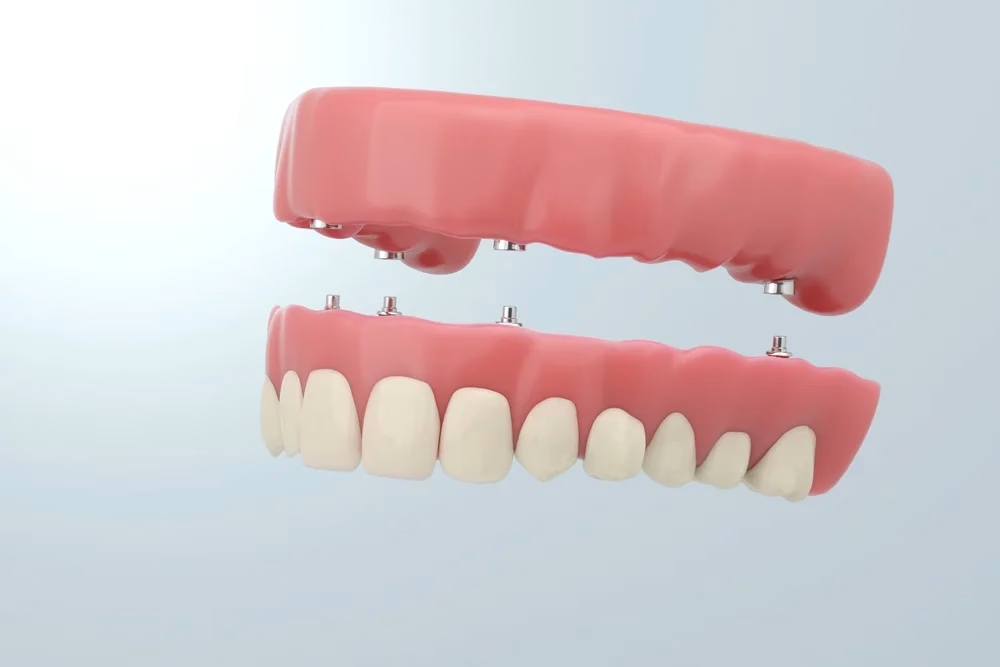
Traditional dentures rest on the gums. Implant-supported dentures connect to dental implants placed in the jawbone, helping the appliance feel more secure during eating and speaking.
Some implant dentures remain removable and snap onto special attachments. Other full-arch restorations are fixed in place and can only be removed professionally.
Possible benefits of implant support include:
- Less denture movement
- Greater confidence while speaking
- Improved chewing stability
- Reduced reliance on adhesive
- Less rubbing caused by appliance movement
- Better retention for lower dentures
- Support for the bone surrounding the implants
- A more secure feeling in public
Implant-supported dentures generally cost more initially because treatment includes surgical and restorative stages. Patients also need sufficient bone, healthy tissues, and the ability to heal properly.
Medical history, smoking, gum disease, oral hygiene, and medications may all affect implant candidacy. Dr. Alyesh provides implant and surgical dental services and can explain whether implants are appropriate now or could be added to a future treatment plan.
Some patients begin with traditional dentures and later upgrade to implant retention when their health, schedule, or budget allows. Discussing that possibility early can help guide the original denture design.
Understanding the Real Cost of Dentures
Patients often search for affordable dentures because they need a clear answer about cost. The difficulty is that one advertised price may not include the same treatment as another.
The total cost may depend on:
- A full or partial denture
- Treatment of one arch or both
- Materials and design
- Examinations and X-rays
- Necessary tooth extractions
- Treatment of infections or gum disease
- Bone reshaping
- Immediate denture placement
- Included adjustments
- Temporary and permanent relines
- Repairs during healing
- A separate final denture
- Dental implants and attachments
- Insurance coverage
A low advertised price may cover only the denture itself. Extractions, imaging, relines, or follow-up appointments may be separate.
Dr. Alyesh provides a personalized treatment plan based on the condition of the mouth. Patients should understand what is included now and what is likely to be needed later before comparing one estimate with another.
Affordable Does Not Have to Mean Poorly Fitting
A denture that cannot be worn comfortably is not a bargain. Repeated repairs, constant adhesive purchases, emergency adjustments, and early replacement can make a low-priced appliance more expensive over time.
Long-term value depends on factors such as:
- Accuracy of the impressions
- Quality of the bite records
- Strength of the denture base
- Durability of the replacement teeth
- Proper support from the gums and remaining teeth
- Natural-looking tooth arrangement
- Included follow-up care
- Ability to adjust or reline the appliance
- The patient’s home care and maintenance
The most appropriate choice is not always the most expensive one. A straightforward traditional denture may serve one patient very well, while another may struggle without implant support. Dr. Alyesh helps patients weigh likely performance against cost so treatment makes sense in real life.
Designing Dentures That Look Like They Belong to You
Many patients worry that dentures will look too large, too white, or overly perfect. Natural-looking results depend on much more than selecting a row of replacement teeth.
Denture design considers:
- Facial proportions
- Lip and cheek support
- Tooth width and length
- Tooth shape
- Shade and brightness
- Gum color
- Smile line
- Amount of tooth visible while speaking
- Position of the teeth within the bite
- The patient’s personal preferences
Some patients want a noticeably brighter smile. Others prefer small variations in shade and alignment that make the teeth appear more natural. Neither preference is wrong.
Dr. Alyesh discusses these details before the denture is finalized. The goal is to restore the smile without creating an appliance that looks disconnected from the patient’s face.
What Happens During the Denture Process?
Making a denture requires several steps because the appliance must coordinate with the gums, bite, facial features, speech, and appearance.
Examination and X-Rays
Dr. Alyesh examines the gums, remaining teeth, supporting bone, bite, and oral tissues. X-rays may be recommended to identify infection, retained roots, bone loss, or teeth that require treatment.
Planning the Treatment
The patient’s oral health, priorities, budget, and timeline are discussed. Dr. Alyesh explains which teeth may be preserved, whether extractions are necessary, and whether traditional or implant-supported treatment should be considered.
Preparing the Mouth
Cavities, gum disease, infections, and failing teeth may need treatment before the denture is completed. The timing of extractions and impressions depends on whether an immediate or conventional denture is planned.
Taking Impressions
Detailed impressions or digital records capture the shape of the gums and supporting tissues. Accurate records help reduce movement and pressure points.
Measuring the Bite
Bite records determine how the upper and lower jaws meet. They also help establish the proper height of the replacement teeth and the amount of facial support.
Selecting the Teeth
Tooth shade, size, shape, and arrangement are chosen according to the patient’s appearance and preferences.
Evaluating a Try-In
When the treatment process allows, a wax try-in gives the patient and dentist an opportunity to evaluate the smile and bite before the denture is completed.
Delivering the Denture
Dr. Alyesh checks fit, appearance, bite, pressure areas, and speech. The patient receives instructions for inserting, removing, wearing, cleaning, and adapting to the appliance.
Completing Adjustments
New dentures often require follow-up adjustments. Areas that feel comfortable during the first few minutes may become sore after eating and speaking throughout the day. Professional adjustments are a normal part of the process.
Eating With New Dentures
Learning to eat with dentures takes practice. The tongue, cheeks, and jaw muscles need time to coordinate around a removable appliance.
Start with softer foods cut into small pieces, such as:
- Eggs
- Yogurt
- Pasta
- Rice
- Tender fish
- Soft vegetables
- Oatmeal
- Soup
- Soft fruit
- Finely cut meat
Chew slowly and try to use both sides of the mouth. Chewing entirely on one side can cause the denture to tip.
Biting directly into firm foods with the front teeth may also dislodge the appliance. Cutting apples, sandwiches, and tougher foods into smaller pieces can make them easier to manage.
Most patients gradually add more foods as control improves. Very sticky, hard, or difficult-to-tear foods may remain challenging with traditional dentures.
Speaking More Comfortably With Dentures
New dentures change the space available to the tongue and the surfaces used to form certain sounds. Speech may feel unfamiliar at first, particularly with words containing “s,” “f,” “v,” or “th.”
Reading aloud and repeating difficult words can help the tongue adapt. Speaking naturally is usually more helpful than slowing down excessively.
Temporary increases in saliva are also common because the mouth recognizes the appliance as something new. This usually improves with continued wear.
Persistent clicking, gagging, whistling, or major speech difficulty may indicate that the bite, tooth position, thickness, or fit needs adjustment.
Managing Sore Spots
A new denture can create localized areas of pressure. Mild awareness is common during adaptation, but sharp pain, open sores, or an inability to wear the denture should be evaluated.
Do not file, sand, or bend the appliance at home. Removing material from the wrong area can weaken it and make the fit worse.
When possible, wear the denture before the adjustment visit so the irritated area remains visible. This helps Dr. Alyesh identify where pressure is occurring and modify the correct portion of the appliance.
Immediate dentures may need several adjustments as swelling decreases and the tissues continue healing.
Denture Relines, Repairs, and Replacements
The denture itself may remain unchanged while the gums and bone beneath it gradually change shape. This can create looseness and make food collect under the appliance.
An adjustment modifies a small area causing pressure or bite interference.
A reline adds new material to the inside surface so the denture fits the current shape of the mouth more closely.
A repair addresses damage such as a crack, broken base, or detached denture tooth.
Replacement may be more appropriate when:
- The denture teeth are badly worn
- The appliance repeatedly cracks
- The bite has changed significantly
- Facial support has decreased
- The base has become distorted
- The denture remains loose after relining
- Numerous previous repairs have weakened it
- The patient wants major cosmetic changes
Dr. Alyesh evaluates whether adjustment, repair, relining, or replacement offers the best long-term value. Repeatedly repairing an appliance that can no longer function properly may not be the most affordable choice.
Cleaning Dentures Every Day
Dentures accumulate plaque, food particles, bacteria, and stains. Daily care helps protect the appliance and the tissues underneath it.
A good routine may include:
- Removing and rinsing the denture after meals
- Brushing with a soft denture brush
- Using a nonabrasive denture cleaner
- Cleaning the gums, tongue, and palate
- Keeping the appliance moist when removed
- Rinsing it before placing it back in the mouth
- Attending regular dental examinations
Regular toothpaste may scratch denture materials and create rough areas where stains and bacteria collect. Hot water may warp the base.
Even patients with no remaining natural teeth need oral examinations. The gums, tongue, bone, bite, and other tissues can still develop problems that deserve attention.
Why Van Nuys Patients Choose Credit Family Dentistry
Credit Family Dentistry is located nearby in Panorama City and welcomes patients from Van Nuys and surrounding San Fernando Valley communities. Patients can receive examinations, digital imaging, extractions, complete dentures, partial dentures, dental implants, and ongoing preventive care through one practice.
Dr. Alyesh has more than 10 years of experience providing general, restorative, cosmetic, implant, endodontic, and oral surgery services. His broad experience is helpful when denture treatment requires decisions about which teeth can be saved, how extractions should be coordinated, or whether implants may improve stability.
Patients also appreciate:
- Personalized denture planning
- Full and partial denture options
- Immediate denture treatment
- Implant-supported alternatives
- Natural-looking smile design
- Clear explanations of expected costs
- A gentle, family-friendly environment
- Support for English- and Spanish-speaking patients
The best denture plan should fit more than the mouth. It should also fit the patient’s health, lifestyle, expectations, and available budget.
Schedule an Affordable Denture Consultation Near Van Nuys, CA
If you are missing several teeth, struggling with an old denture, or preparing to have failing teeth removed, call Dr. Alyesh at (818) 895-1321 to schedule an appointment. We will evaluate your teeth, gums, bite, and supporting bone, explain the available denture options, and help you choose a treatment that supports your comfort, appearance, function, and budget.
You should not have to keep avoiding favorite foods, hiding your smile, or worrying that your denture will move during an important moment. Let our nearby dental team help you explore an affordable, personalized denture solution designed to make everyday life feel easier.